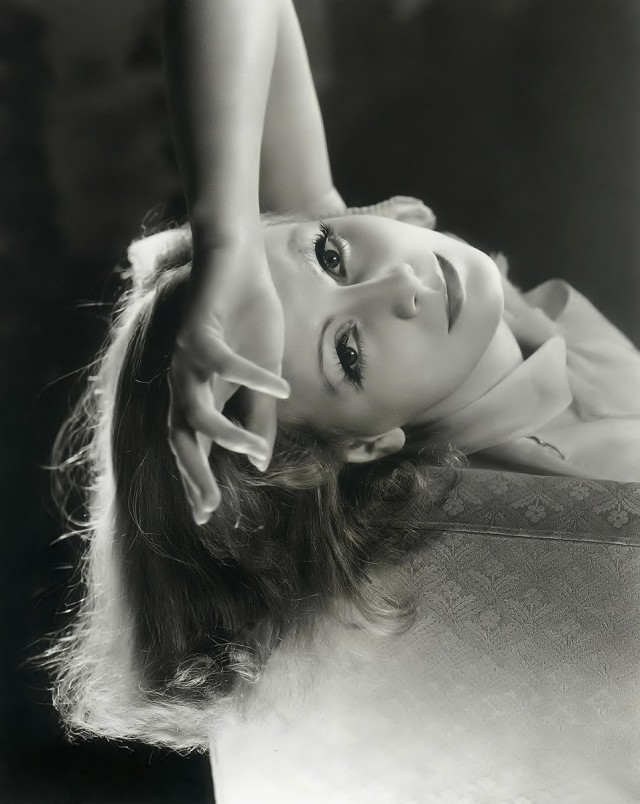
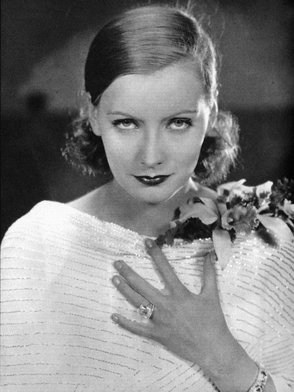
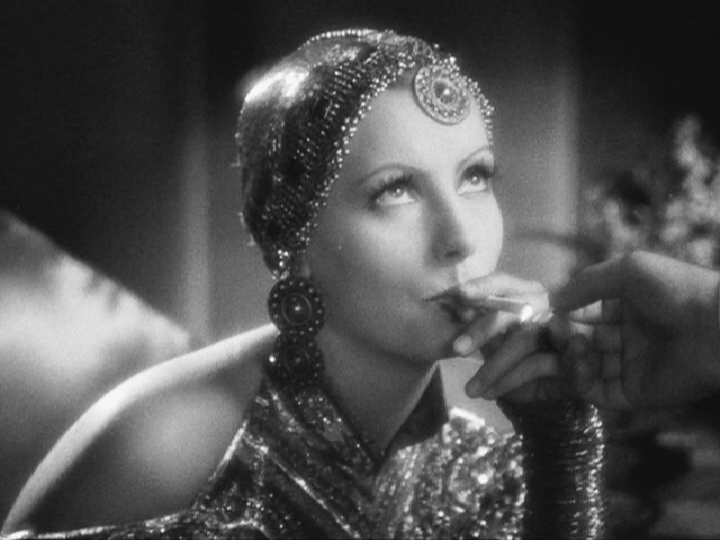
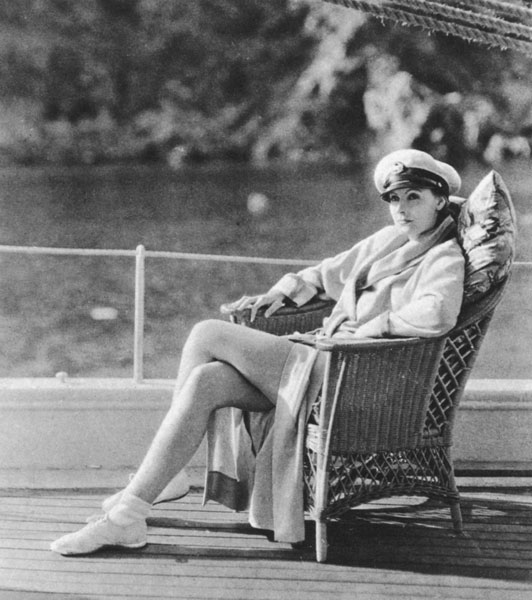
Today would have been Greta Garbo’s 108th birthday. She is still considered one of the greatest sirens of the silver screen, a truly iconic figure embodying all the mystery and allure that the camera can bestow on the feminine form.
Want proof? Look no further than the following.
The year was 1926.
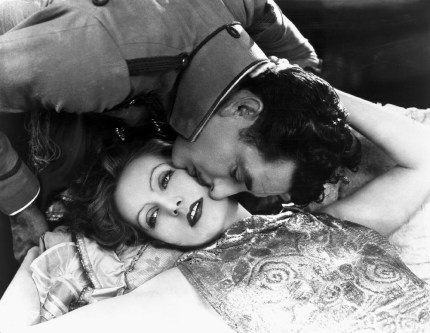
Filming a pivotal scene for Flesh and the Devil, the story of an illicit romance á la Anna Karenina, director Clarence Brown had little idea of how life was about to mirror art.
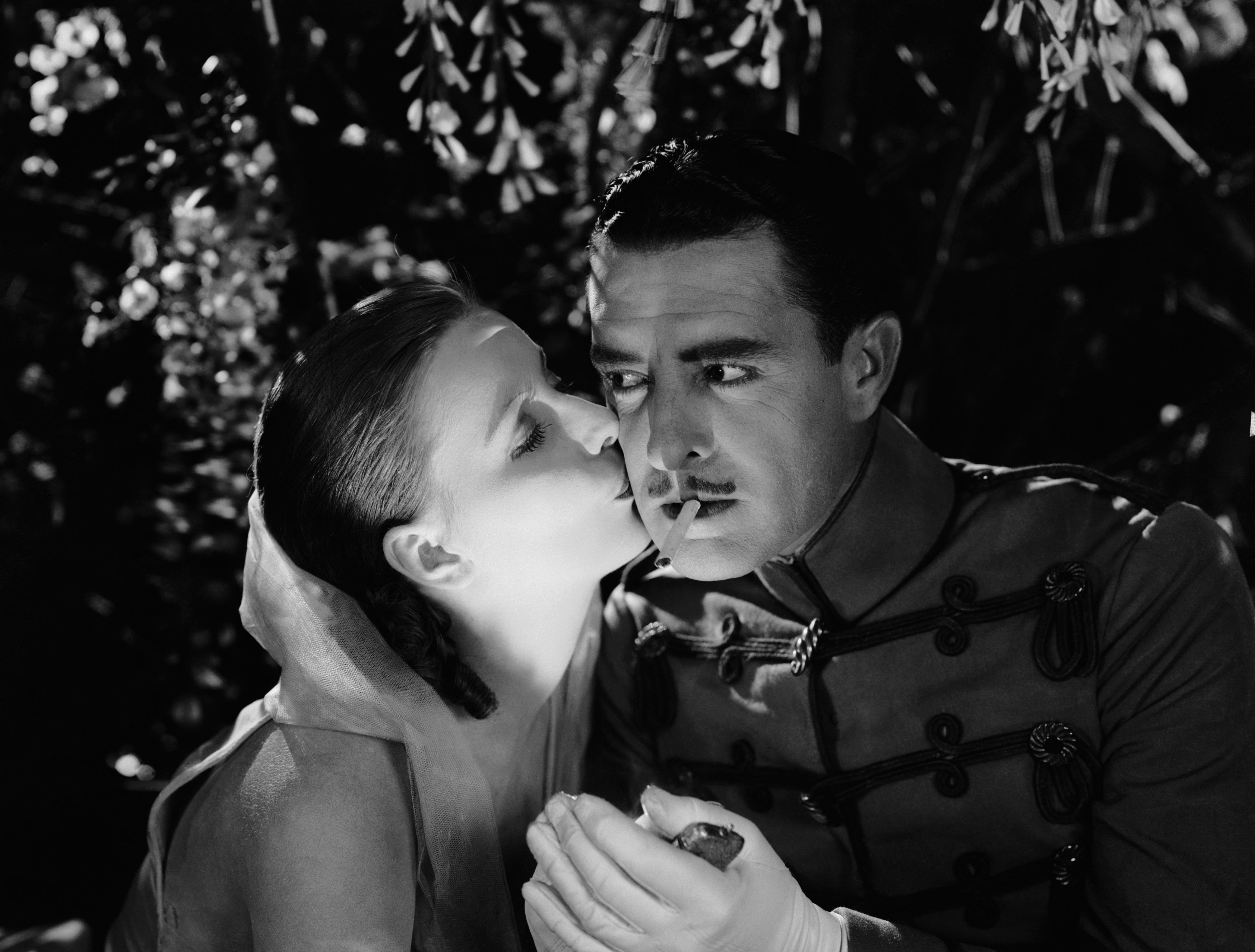
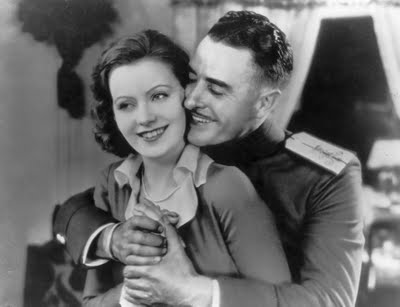
It was the scene where the leading lady, Greta Garbo, was to meet her great love, John Gilbert, for the first time. In real life as well as on screen.
It’s the scene in the train station (alas, not available in clip form). When you watch it, you can almost believe you are watching the actors falling in love at the same time as their characters do. According to Gilbert’s daughter, Leatrice Gilbert Fountain, whom I met at a screening of the film in New York, that is exactly what happened.
Director Clarence Brown later remarked upon his leading lady: “She had something behind the eyes that told the whole story. On the screen Garbo multiplied the effect of the scene I had taken. It was something she had that nobody else ever had.”
Creating Garbo’s deliriously sensual aura was the work of cinematographer William Daniels, a veteran collaborator of maverick director Erich von Stroheim. Using heavy gauzes and filters over the camera lens, he wraps the lovers in a shimmering passion and eroticism.
Listen to how Carl Davis’s score enhances the effect with its allusions to Richard Strauss, especially the Moonlight music from Capriccio.
You’re about to watch the climactic scene where the lovers kiss for the first time. It begins at a ball. Gilbert can think only of the woman he met at the train station. Will he see her again?
They move into the garden…..
Gilbert and Garbo were to marry. The story goes that, on his wedding day — a grand, Hollywood affair — Garbo failed to show. Gilbert got drunk and took it out on his boss, Louis B. Mayer. Mayer swore he would destroy Gilbert’s career. Gilbert never made the transition to talkies, ostensibly because of his reedy voice. But maybe the apocryphal version of how events unfolded holds the greater truth: could any man ever survive loving Garbo? (Or pissing off Louis B.?)
Even though Gilbert’s career was in decline, Garbo insisted that he co-star with her in Queen Christina (1933)
While Gilbert spiraled downwards, Garbo continued to ascend higher into the Hollywood heavens. With the arrival of talkies her accented voice beguiled as much as her looks, and she later revealed a talent for comedy in Lubitsch’s sublime Ninotchka (1939). Audiences were so accustomed to Garbo smoldering rather than smirking that the studio used her new-found levity as a log-line on their posters.
If you’re ever in need of a cinematic pick-me-up, look no further.
Even MGM’s Leo the Lion seems cowed by the Legend that was Garbo
Forget Helen of Troy. It was Garbo who not only launched a thousand and more ships of romantic dreams, but then dashed them upon the rocks of her early retirement and retreat from the world. She was, finally, alone.
But in the garden of film immortals she awaits her lovers still….
What is the ultimate movie-going experience? The ultimate big screen blow-out?
2001: A Space Odyssey?
Lawrence of Arabia?
Star Wars?
Think again. Think a silent film, released in 1927. A film that was almost lost to history, if it were not for the obsessive efforts of a young British film-maker and historian, Kevin Brownlow. Today, on Bastille Day, we celebrate that masterpiece of French and world cinema: Napoleon, vu par Abel Gance.
I’ve got long history with this film. I was present at the now-legendary first screenings of Brownlow’s restoration at London’s Empire Theater in Leicester Square. That experience led to a friendship with Kevin, his producer David Gill, and composer Carl Davis, and a series of articles about their ground-breaking restorations of silent movies.
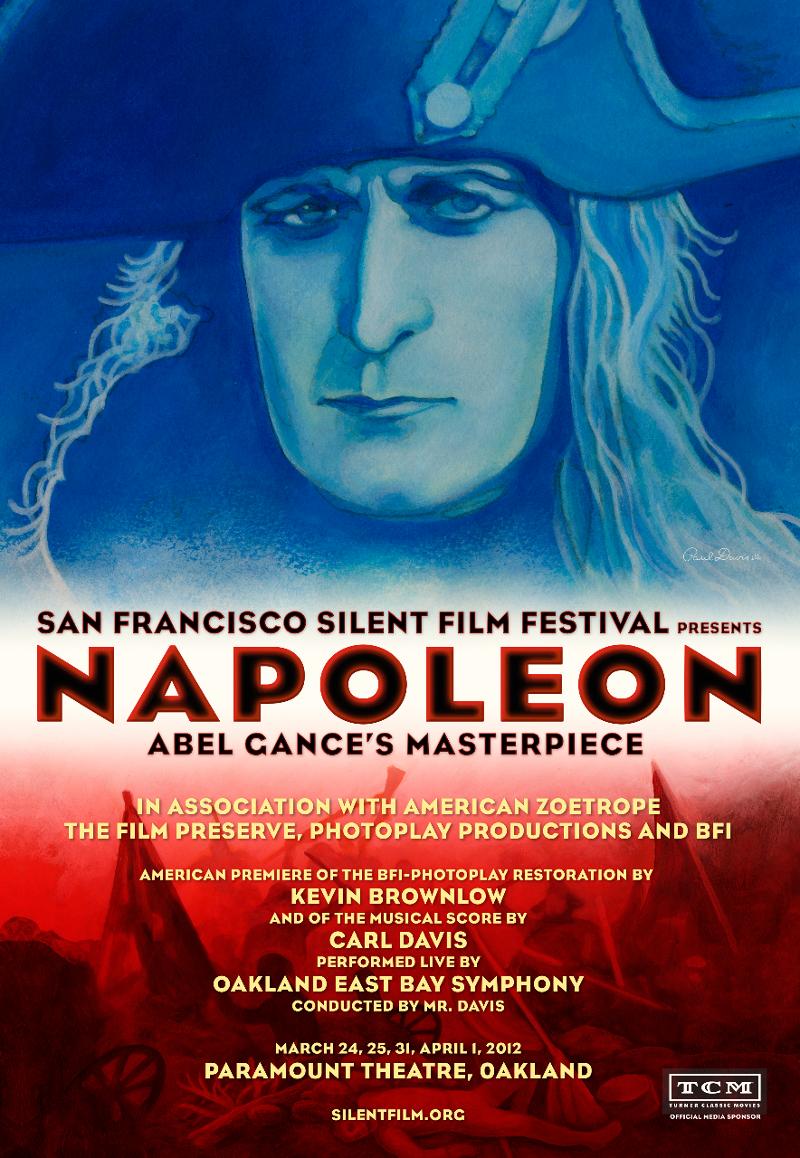
Then, in March 2012, Kevin’s definitive version of the film arrived for the first time in America, complete with Carl Davis’s superlative score. I dragged friends, my daughter and her mother (an ancestor of hers, a mistress of Napoleon, appears as a character in the film) to the screenings. They could not believe their eyes or ears.
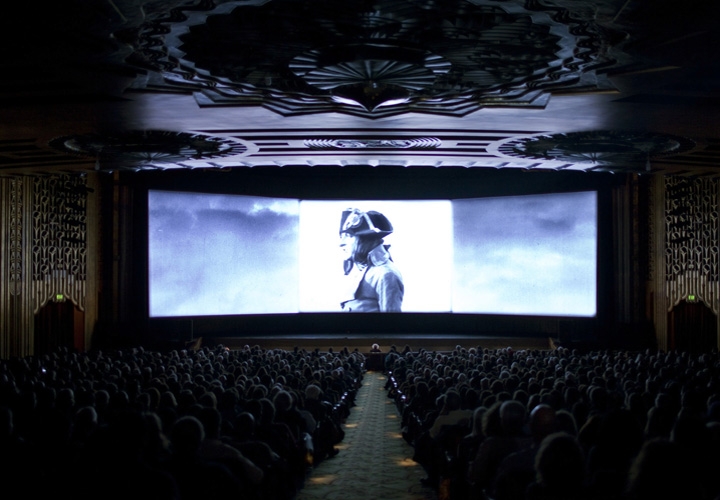
Napoleon at the Paramount Theatre, Oakland, 2012 (Photo: Pamela Gentile)
The following is the review I wrote of the occasion for the Financial Times, supplemented by extra pictures. For those of you who are interested, a screening is taking place in London this Fall. Do not hesitate to do whatever it takes to be there.
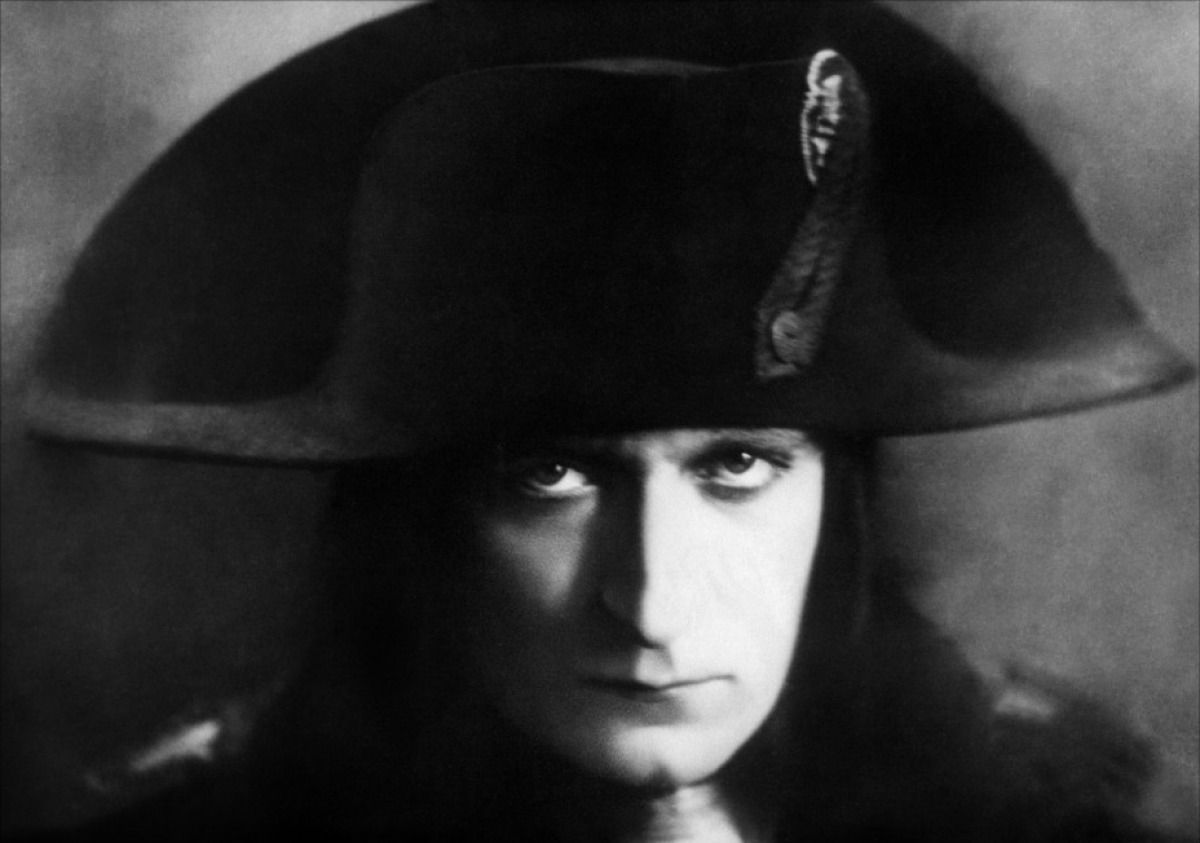
Albert Dieudonne as Napoleon
It has taken 85 years, but America is finally seeing one of the cinematic wonders of the world in all its glory, as the enterprising San Francisco Silent Film Festival presents screenings of Abel Gance’s five-and-a-half-hour 1927 silent epic Napoleon.
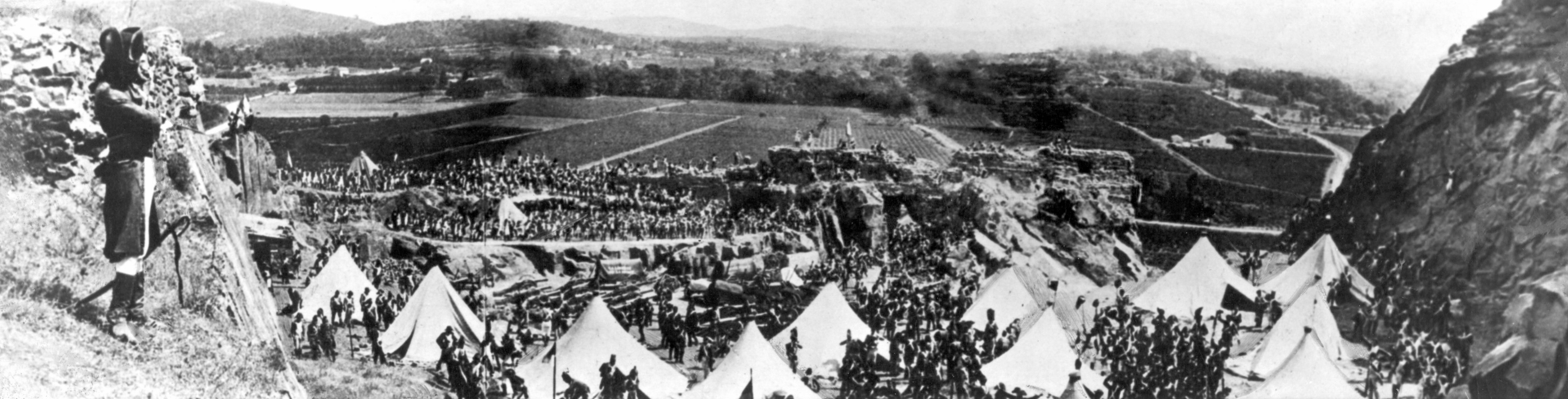
French director Gance originally intended to make six films covering Napoleon’s entire life, but blew his budget on Part One, which takes us from Napoleon’s boyhood to his campaign to liberate Italy. Its first audience didn’t even see all of that: when Napoleon premiered at the Paris Opera, the film had already been severely shortened by nervous producers.
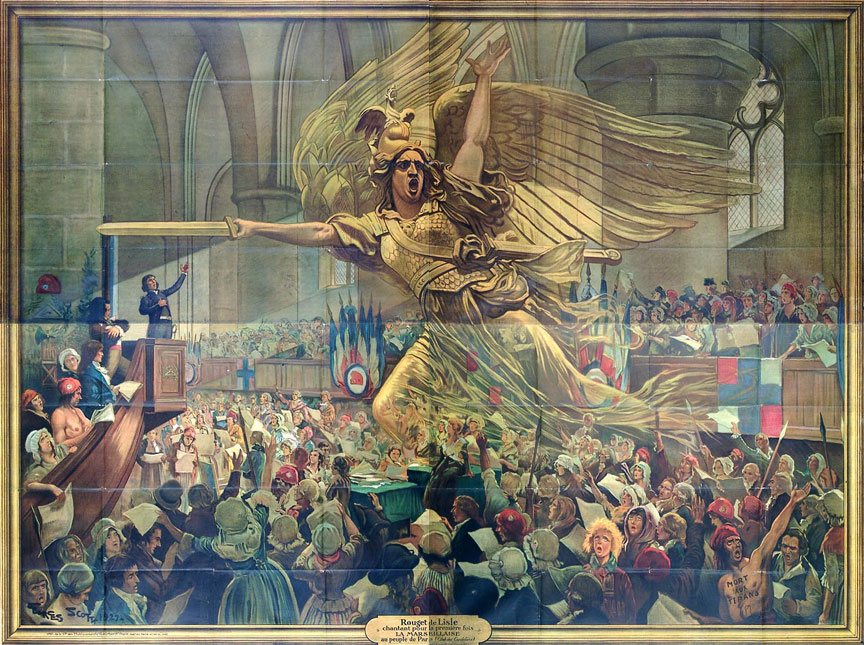
The birth of the Marseillaise is vividly brought to life in the film, and is here rendered into a 1927 poster by Georges Scott
In the succeeding decades, the film was scattered across archives, private collections and flea markets around the world. By 1954, when 15-year-old Kevin Brownlow discovered a 9.5mm home-movie version of excerpts, Gance and his film barely made the footnotes in movie history.
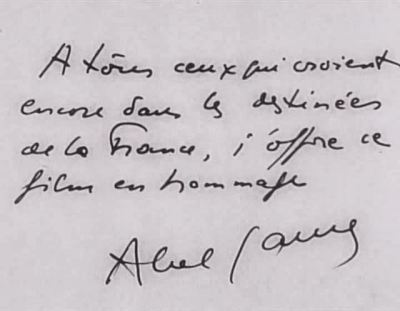
Abel Gance and the young Kevin Brownlow
For Brownlow, a future editor and director himself, viewing the film was a moment of revelation. “The camera did things that I didn’t think it could do, and it represented the cinema as I thought it ought to be, but had never seen an example of,” he recalls. “It was beautifully, brilliantly staged. You couldn’t believe it had been shot in the ’20s.”
The aftermath of battle
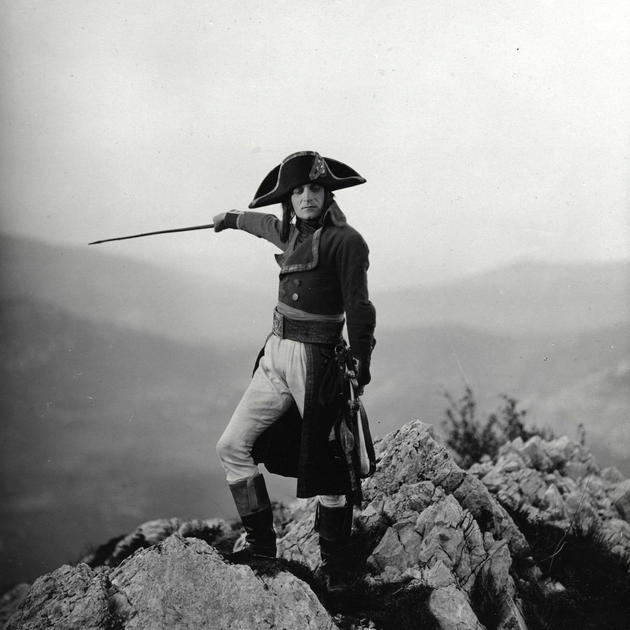
Young Napoleon and the Eagle of Destiny
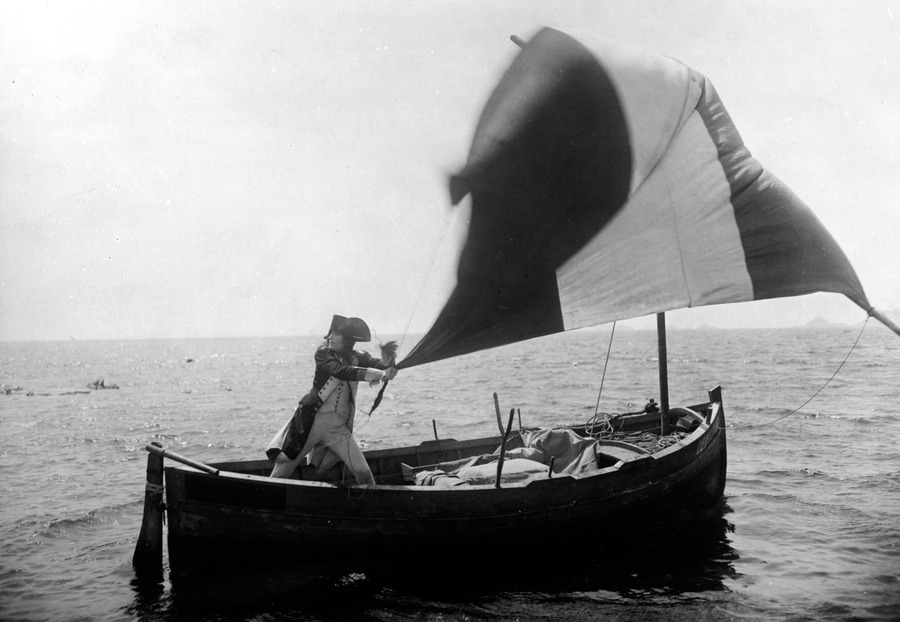
Escaping from Corsica
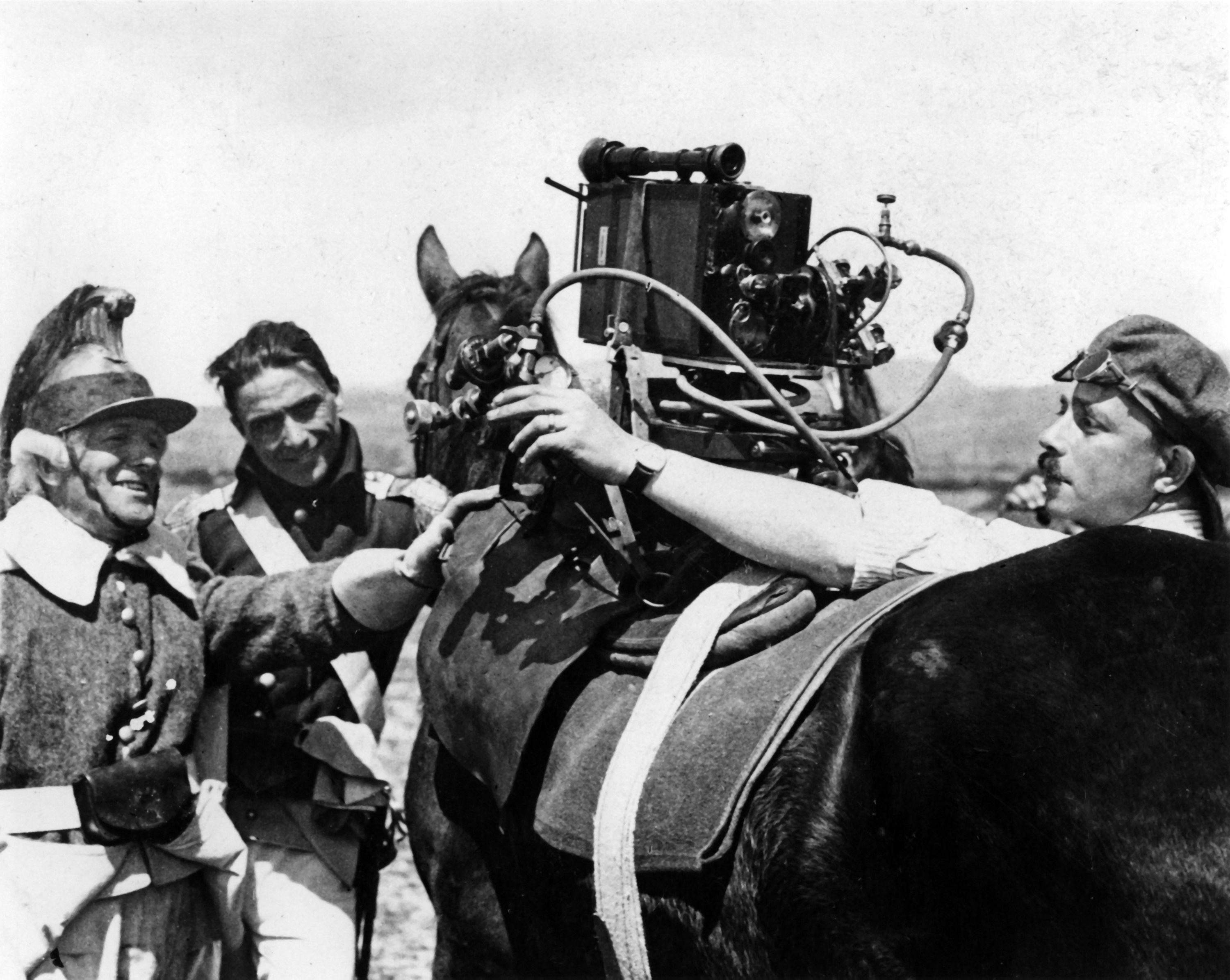
Gance saw film as an immersive medium of poetry and passion. To achieve his aims, cameras were thrown on to galloping horses, mounted on cables and sleds, and swung from pendulums.
Mounting the camera on a horse to film Napoleon’s escape from Corsica
He used split screens, multi-layered dissolves and revolutionary editing techniques to challenge every convention of cinematic storytelling.
The ghosts of the Revolution
Young Napoleon in a precursor to his later battles: the pillow fight
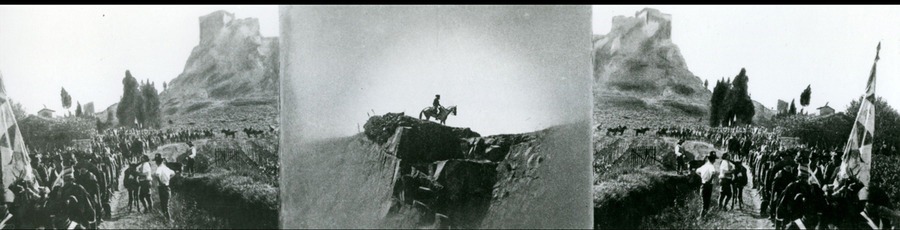
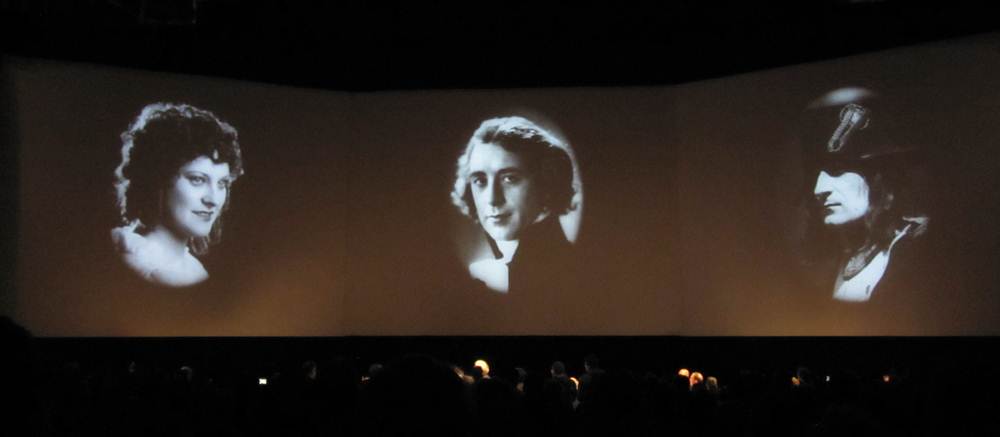
In the finale, when the frame is no longer big enough to accommodate Gance’s vision, the film explodes on to three screens.
He even shot test footage in colour and 3D. Rarely has the avant garde been given such heady rein in a mainstream narrative.
Napoleon embracing Josephine — and the world
Brownlow’s efforts to reconstitute the film turned into a full-blown restoration with the support of the British Film Institute in London. In 1980, British TV company Thames Television funded a theatrical presentation, commissioning an orchestral score from composer Carl Davis.
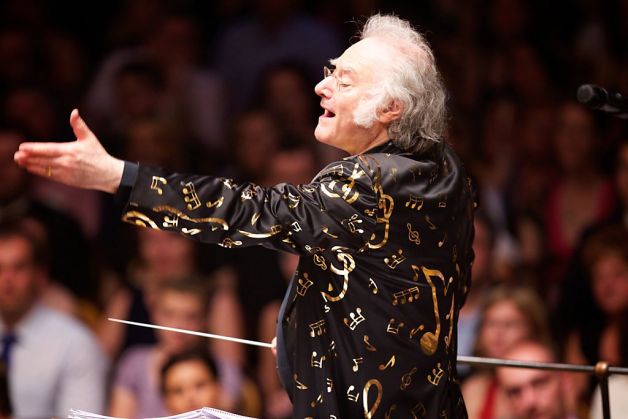
Carl Davis
Davis turned to the classical music of the period – “If the whole film is a biography, a portrait of Napoleon, it could also be a study in the music of Napoleon’s time – Beethoven, Mozart, Haydn, Cherubini, Gluck,” he said – as well as popular songs. The result was a score that perfectly matched the film’s tone and energy; such was the combined impact that those early screenings passed into film-buff legend.
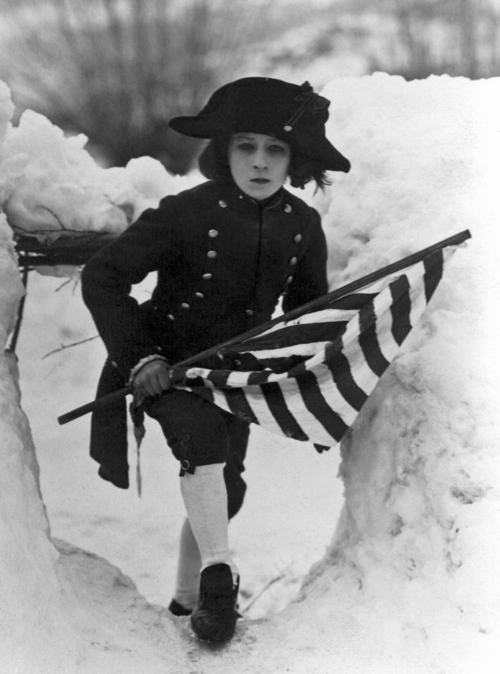
Young Napoleon (Vladimir Rudenko)
It was always hoped that this version of Napoleon would be shown in the US, but the rights there were controlled by director Francis Coppola, who favoured his own, shorter version, with a score by his father Carmine. It enjoyed great success, but was a pale shadow of the British production.
The execution of Danton
Over the years, Brownlow uncovered more footage and better versions of the material he already had. In 2000, the BFI and Photoplay Productions unveiled a dye-bath toned and tinted print, incorporating all the new material.
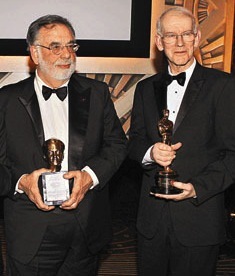
Fast-forward to 2010. In a twist right out of the movies, Brownlow found himself in Los Angeles receiving an honorary Oscar for his work as a film historian. Next to him sat another honoree – Francis Coppola. Whatever transpired in that meeting, the result was that all parties came together to enable the current Oakland screenings.
Coppola and Brownlow on Oscar night
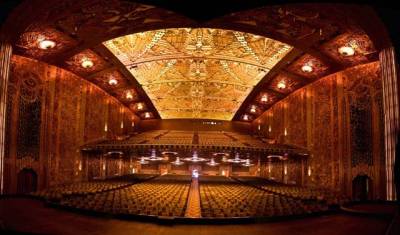
All concerned have done Napoleon more than proud, not least in their choice of venue: the Paramount Theatre’s art deco splendour is a worthy setting for the film’s epic scale.
As for the film itself, the many visual refinements of the current restoration bring an extra cohesion to its narrative flow. The exquisitely nuanced photography registers more clearly, along with the meticulous crafting of period detail, while the tinting, especially in inter-cut scenes of different coloration, adds another level of emotional density. One sinks more deeply into the film.
Death of Marat
But maybe the greatest gift of this Napoleon is the opportunity for American audiences at last to hear music that is fully the equal of the powerful images it accompanies. Carl Davis conducts the Oakland East Bay Symphony in a spirited account of his stamina-challenging score, which, like Brownlow’s restoration, has grown over the years.
With the unveiling of the film’s final triptych, the Paramount’s 85-foot proscenium span ensured that even those who had seen the effect before gasped in astonishment.
Final tryptich (Photo: Pamela Gentile)
It may have taken 85 years to get the film restored and back on the screen, but what’s a few decades when it comes to cinematic immortality?
Josephine (Gina Manes), Saint-Juste (Gance), and Napoleon (Dieudonne)
You can read more about Kevin Brownlow’s unique career as a filmmaker and historian in my interview with renowned director, Sir Alan Parker, here.
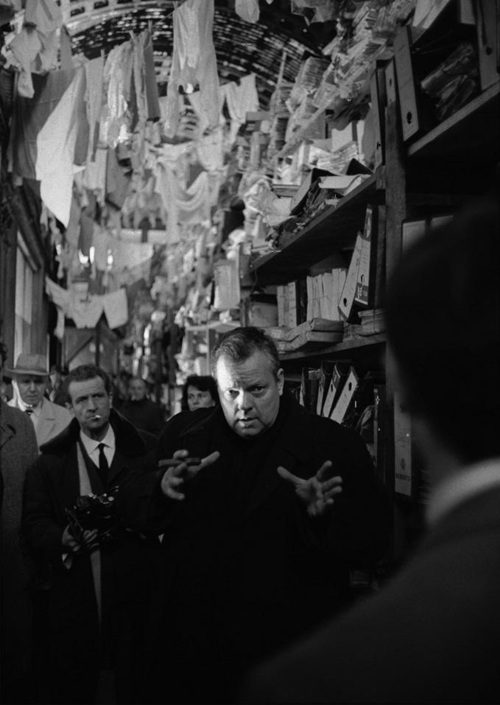
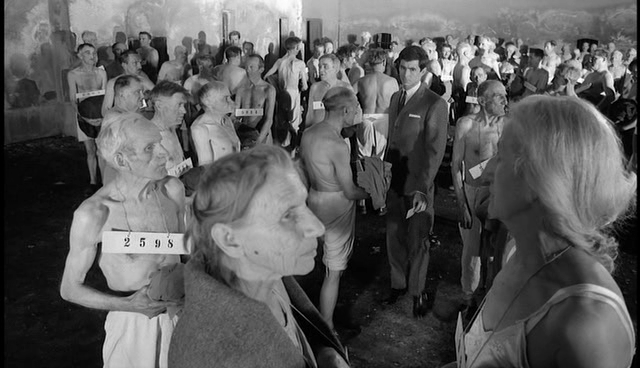
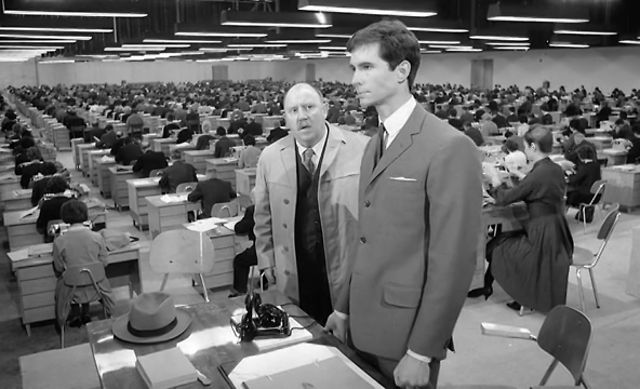
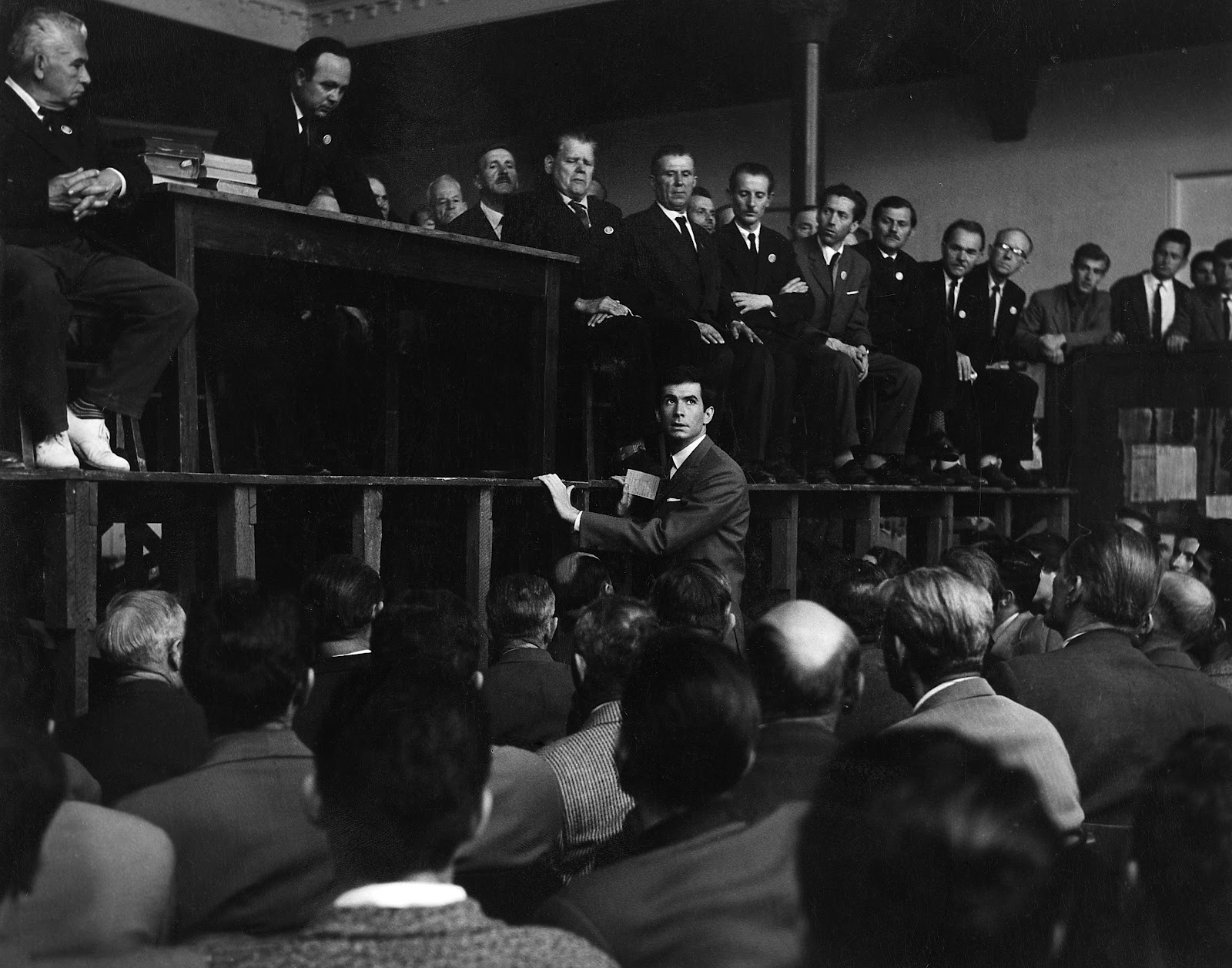
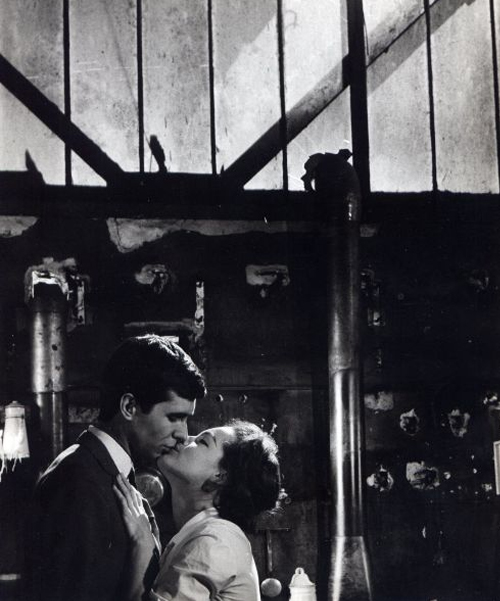
Orson Welles: “What made it possible for me to make the picture is that I’ve had recurring nightmares of guilt all my life: I’m in prison and I don’t know why –- going to be tried and I don’t know why.
“It’s very personal for me. A very personal expression, and it’s not all true that I’m off in some foreign world that has no application to myself; it’s the most autobiographical movie that I’ve ever made, the only one that’s really close to me.
Directing Anthony Perkins
“And just because it doesn’t speak in a Middle Western accent doesn’t mean a damn thing. It’s much closer to my own feelings about everything than any other picture I’ve ever made.”
:
NARRATOR (at opening of film):
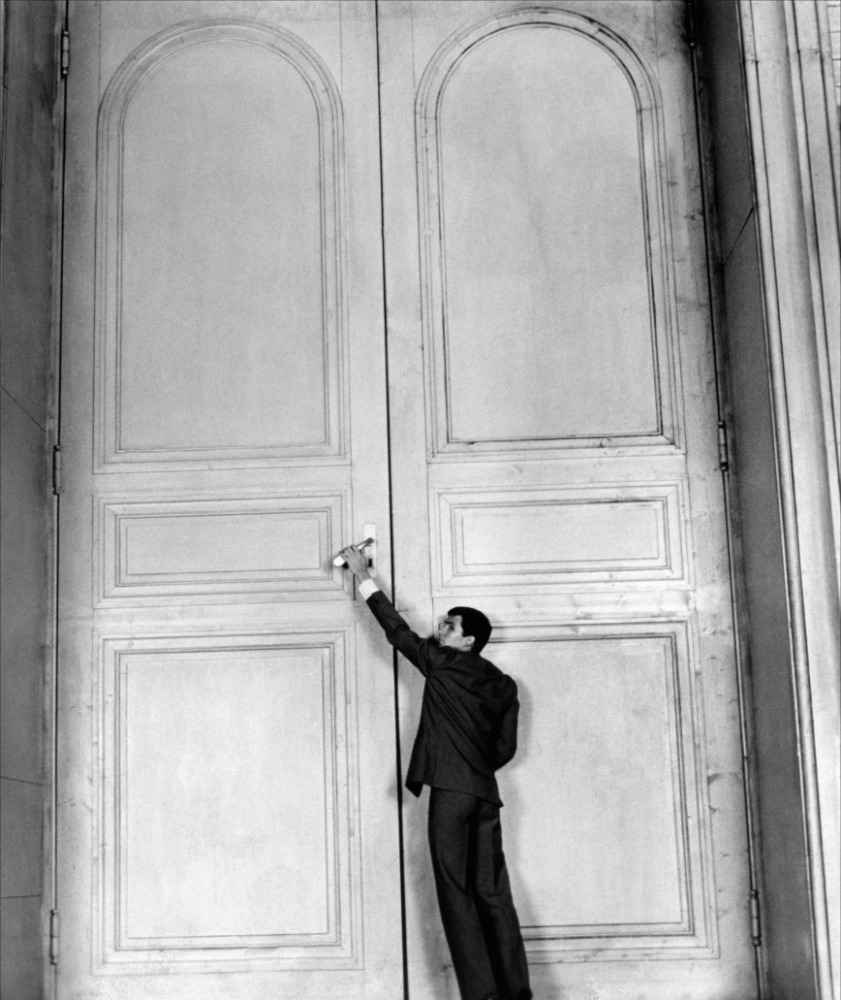
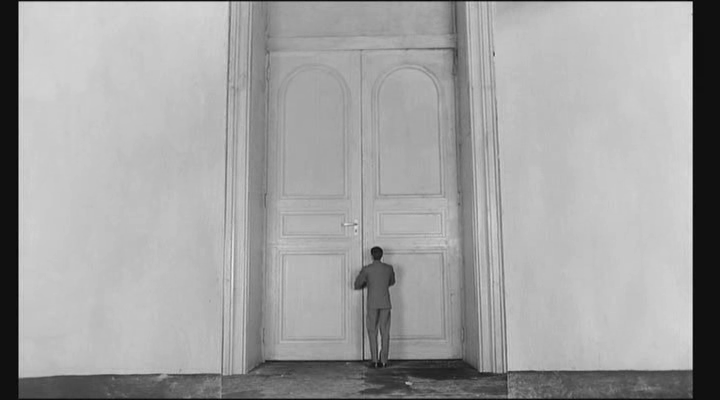
Before the law, there stands a guard.
A man comes from the country, begging admittance to the law.
But the guard cannot admit him.
May he hope to enter at a later time? That is possible, said the guard. The man tries to peer through the entrance.
He’d been taught that the law was to be accessible to every man.
“Do not attempt to enter without my permission”, says the guard. I am very powerful. Yet I am the least of all the guards. From hall to hall, door after door, each guard is more powerful than the last.”
By the guard’s permission, the man sits by the side of the door, and there he waits. For years, he waits.
Everything he has, he gives away in the hope of bribing the guard, who never fails to say to him “I take what you give me only so that you will not feel that you left something undone.”
Keeping his watch during the long years, the man has come to know even the fleas on the guard’s fur collar. Growing childish in old age, he begs the fleas to persuade the guard to change his mind and allow him to enter.
His sight has dimmed, but in the darkness he perceives a radiance streaming immortally from the door of the law.
And now, before he dies, all he’s experienced condenses into one question, a question he’s never asked. He beckons the guard. Says the guard, “You are insatiable! What is it now?” Says the man, “Every man strives to attain the law. How is it then that in all these years, no one else has ever come here, seeking admittance?”
His hearing has failed, so the guard yells into his ear. “Nobody else but you could ever have obtained admittance. No one else could enter this door!
This door was intended only for you! And now, I’m going to close it.”
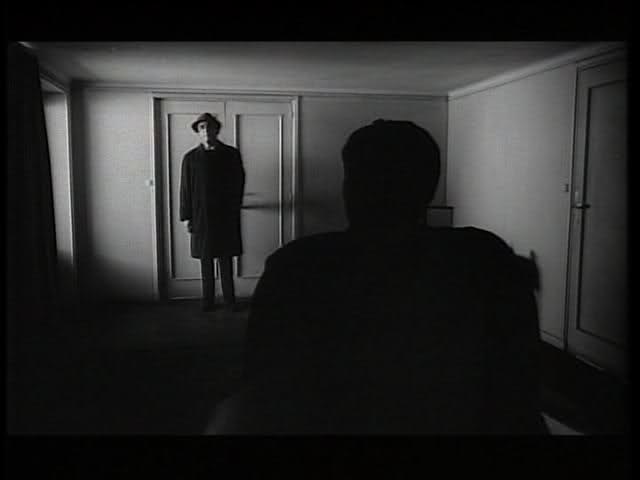
This tale is told during the story called “The Trial”. It’s been said that the logic of this story is the logic of a dream… a nightmare.
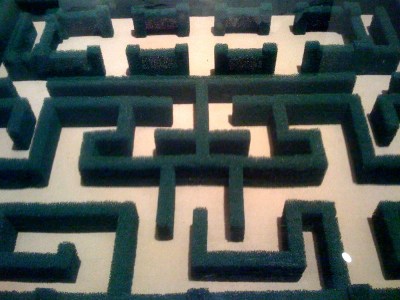
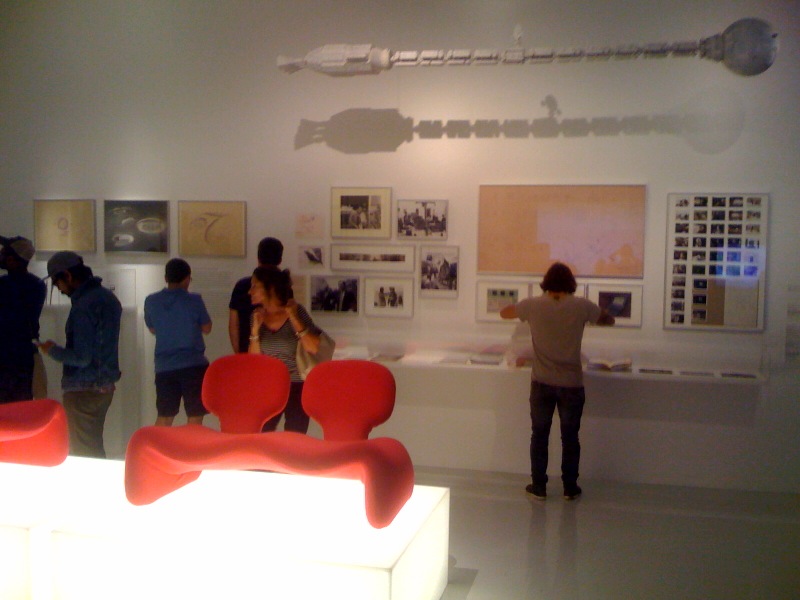
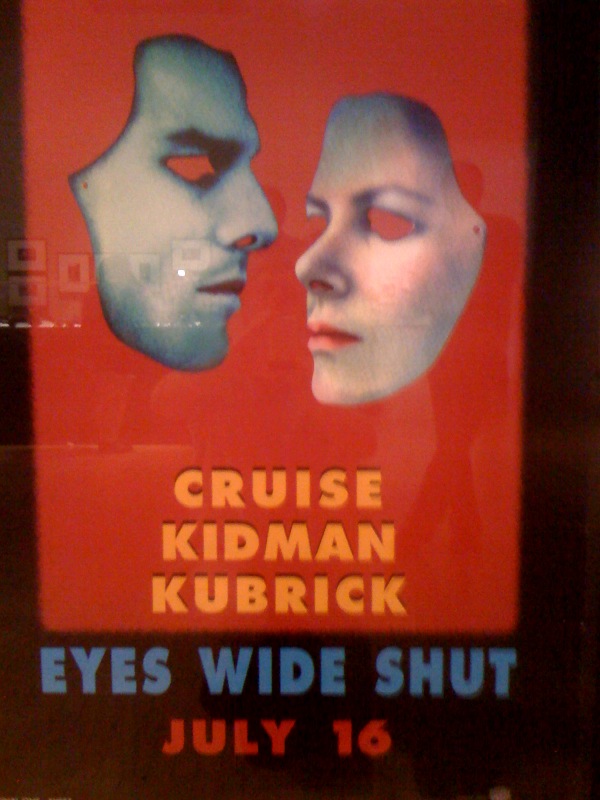
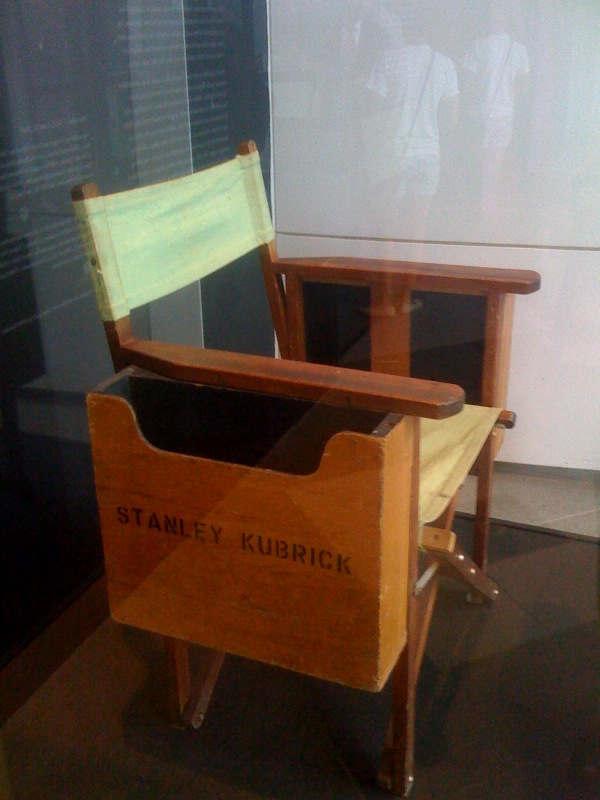
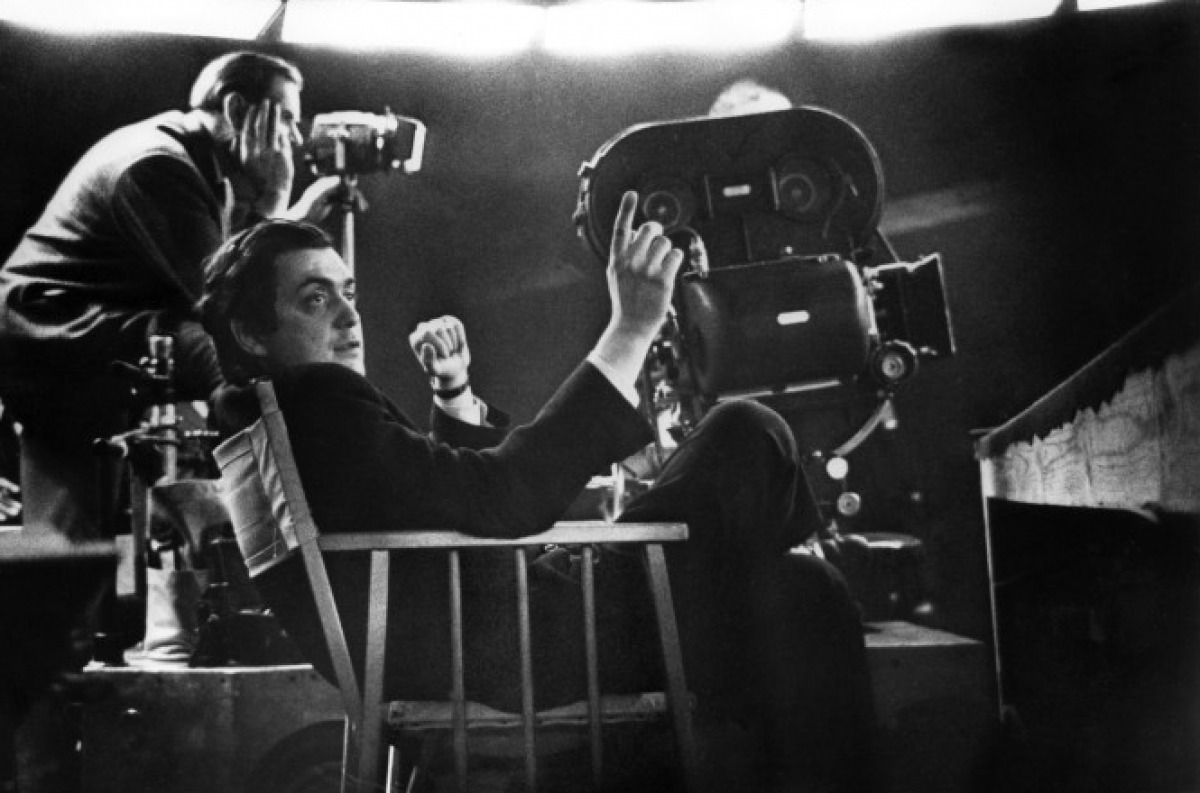
As the stunning Kubrick exhibition prepares to depart Los Angeles, here is a quick tour (with some additional photos). Think of this as a prelude to a future perambulation through the Kubrickian maze….
“Essentially the film is a mythological statement. Its meaning has to be found on a sort of visceral, psychological level, rather than in a specific, literal explanation.” — Stanley Kubrick.
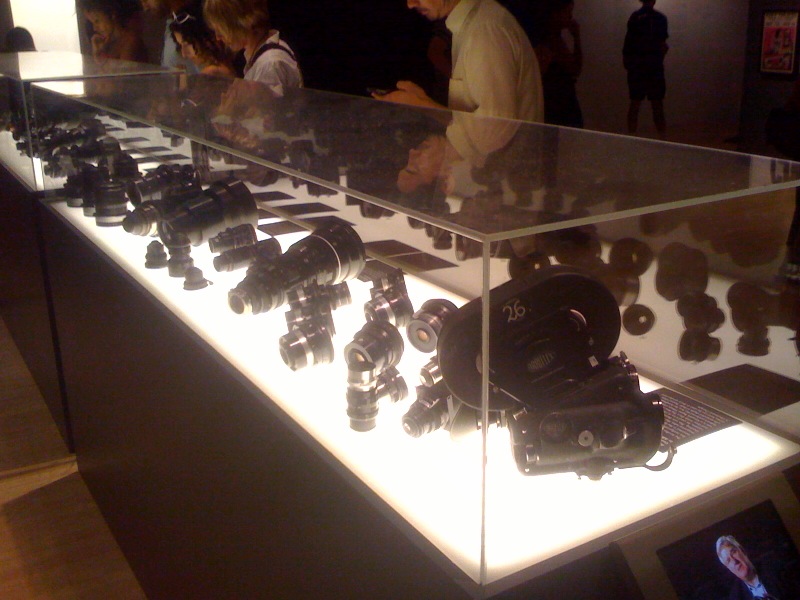
The altering eye: Kubrick’s cameras and lenses
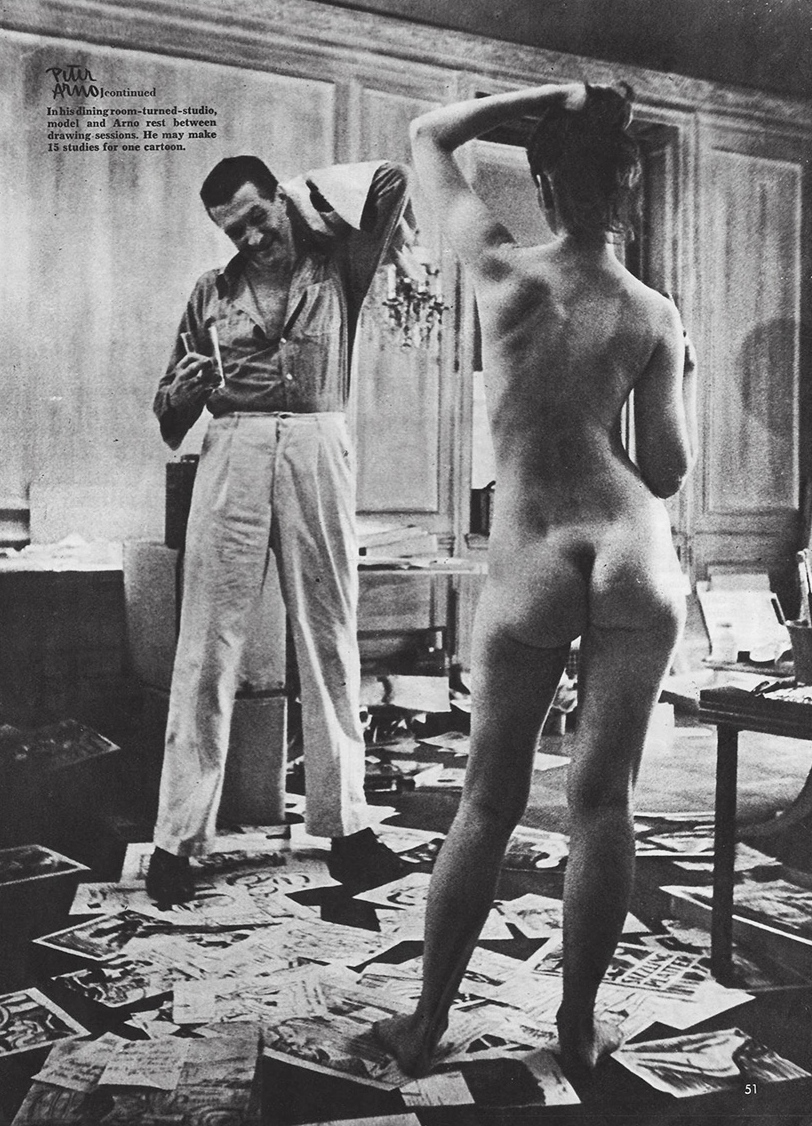
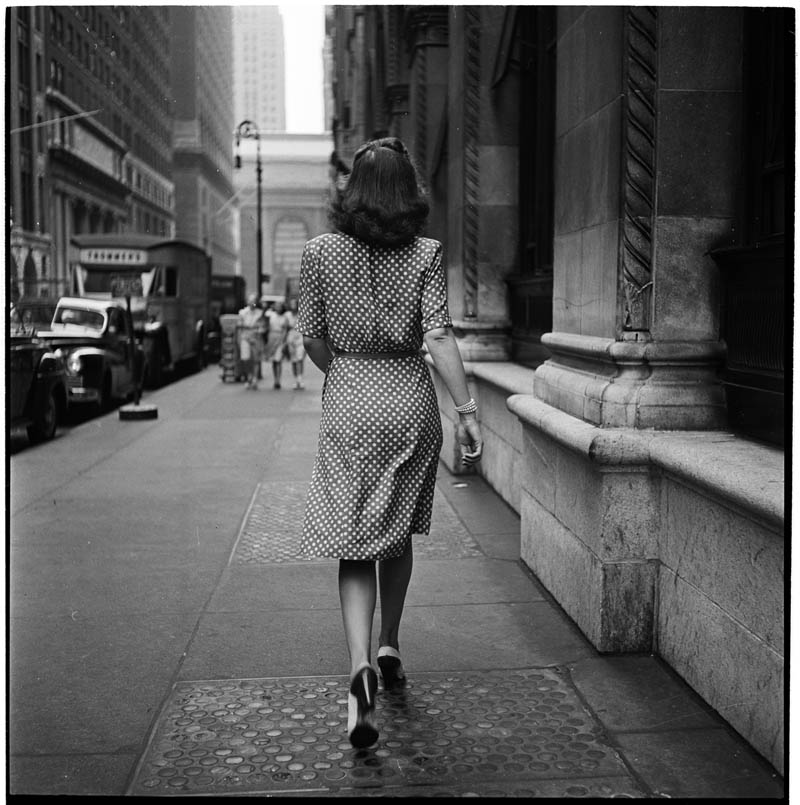
From Kubrick’s photos of New York life in the 1940s in Look magazine:
Cartoonist Peter Arno with model
Deep space and wide angles — Kubrick signatures
The Shining
The following shot — a Kubrick favorite
Full Metal Jacket
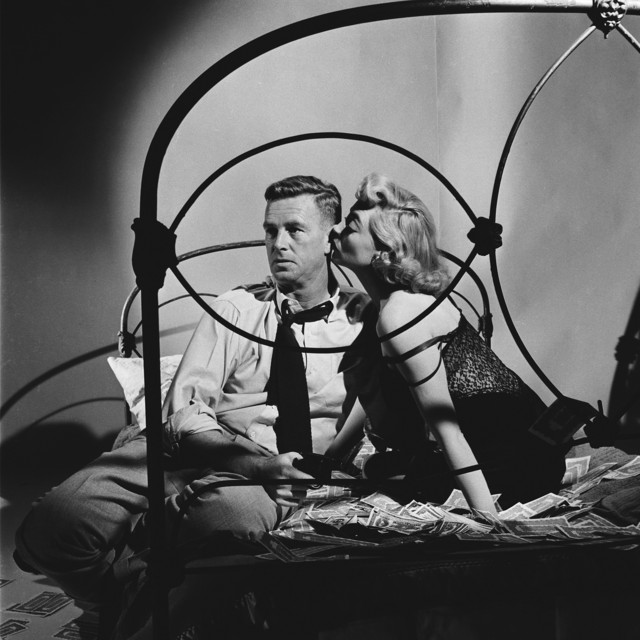
Sterling Hayden and Coleen Gray
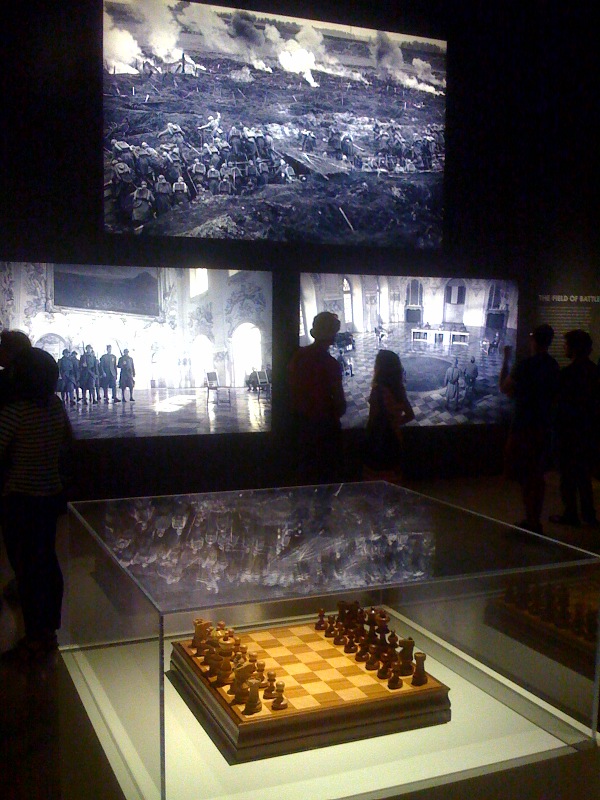
The art of strategy — the strategist in art. On set and onscreen Kubrick always had a chess game in progress (here in Paths of Glory)
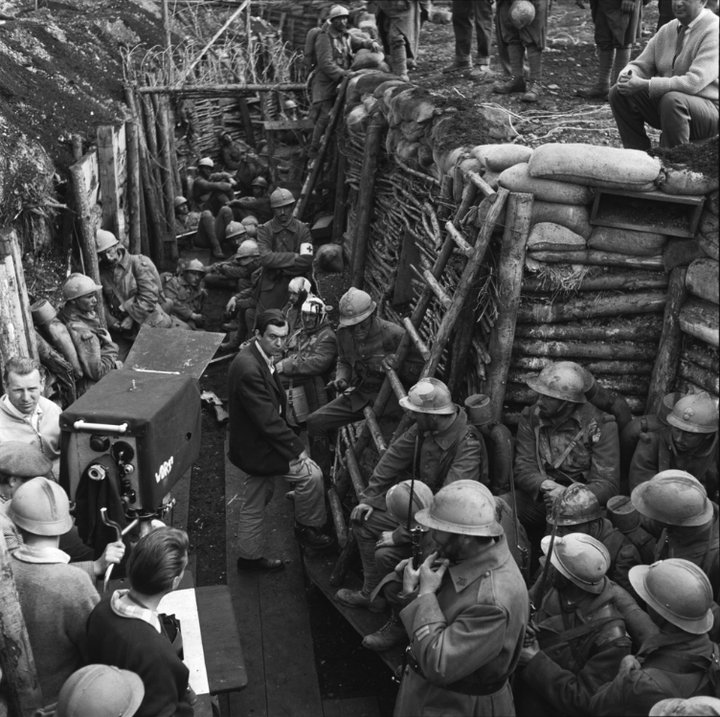
On location shooting Paths of Glory
The patterns of war: storyboards for Spartacus by the legendary Saul Bass
Costume for Crassus (Laurence Olivier)
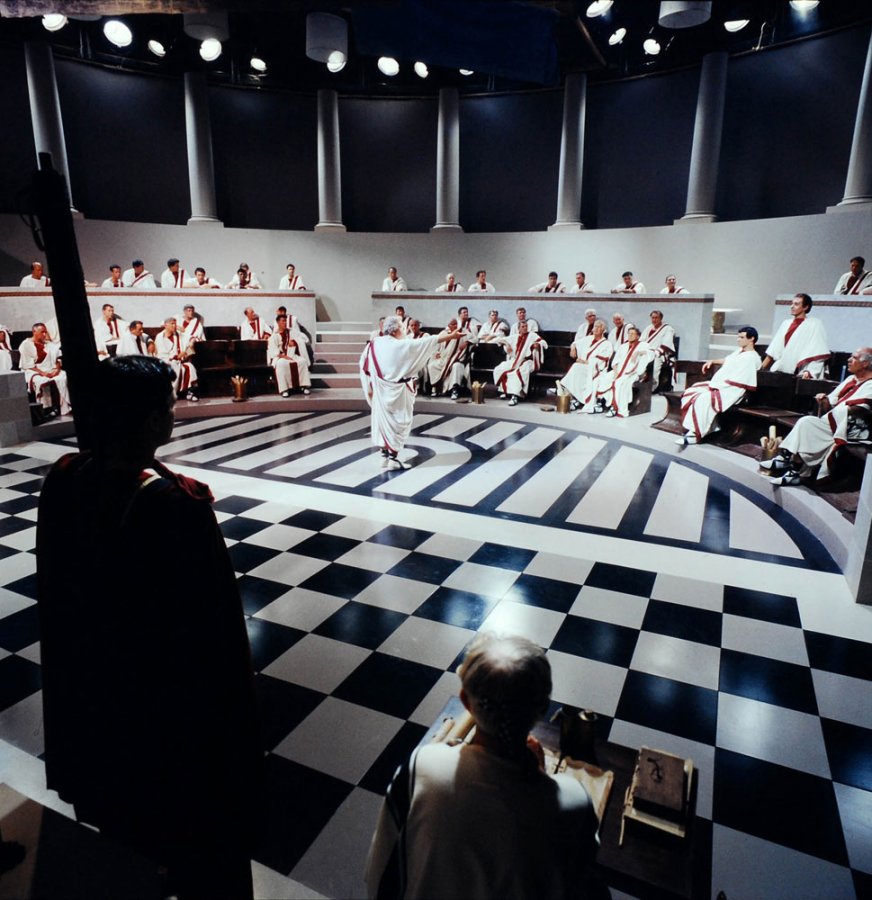
The Senate set
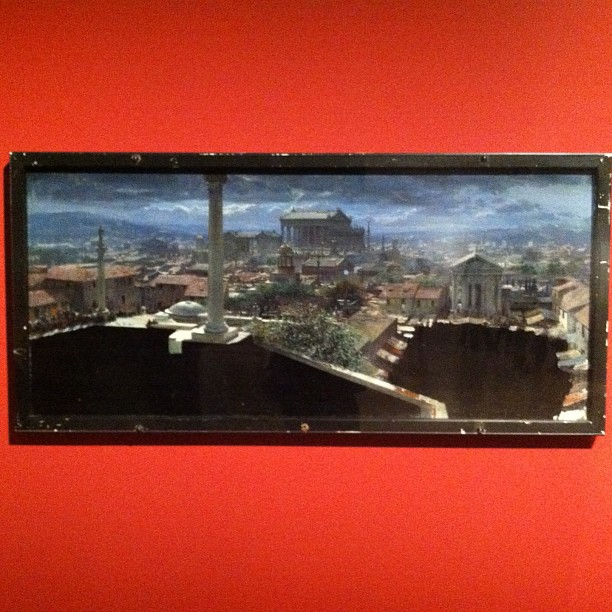
Matte painting for Spartacus by the legendary Peter Ellenshaw
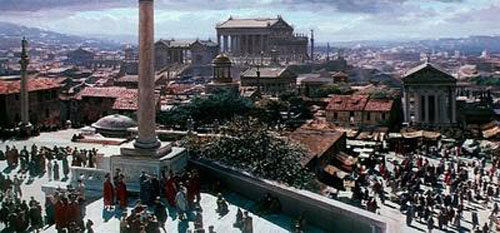
Finished scene
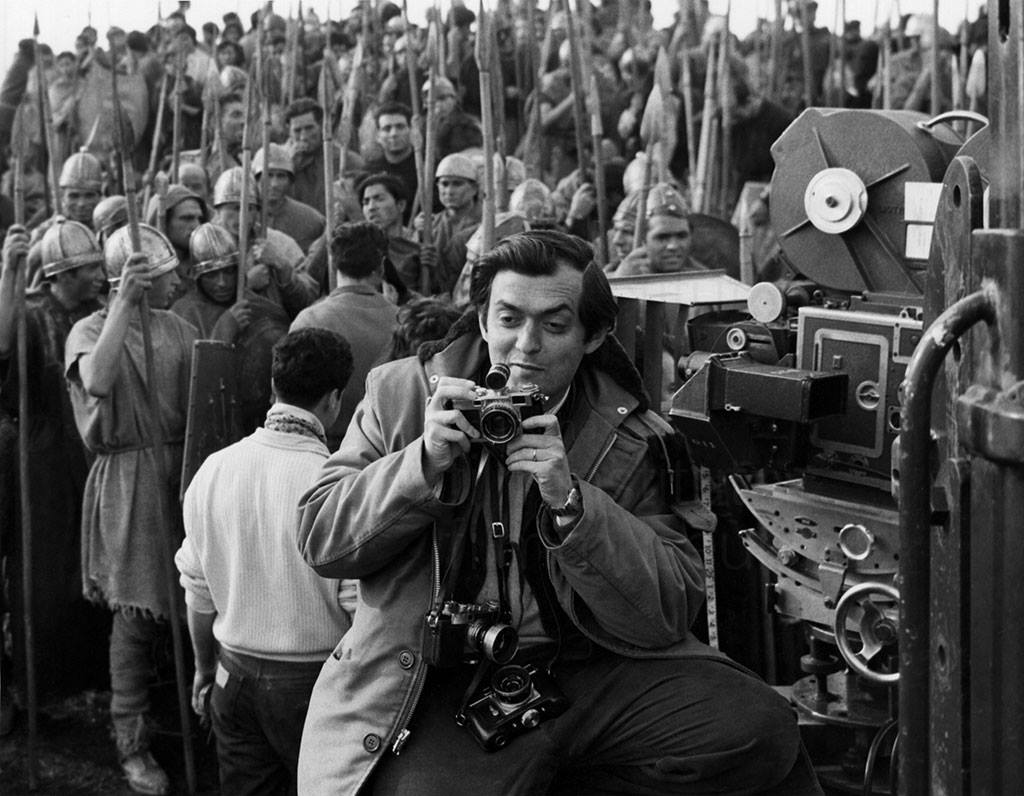
Shooting Spartacus
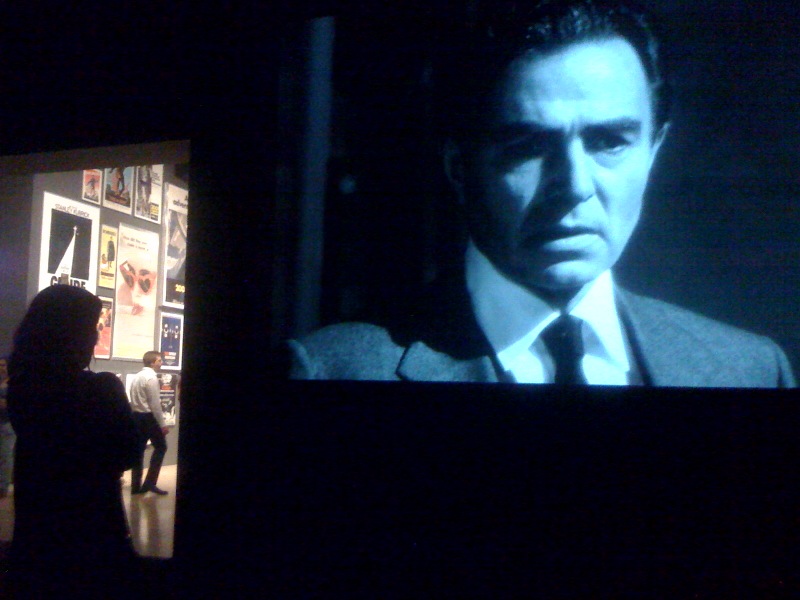
Contemplating James Mason contemplating Lolita….
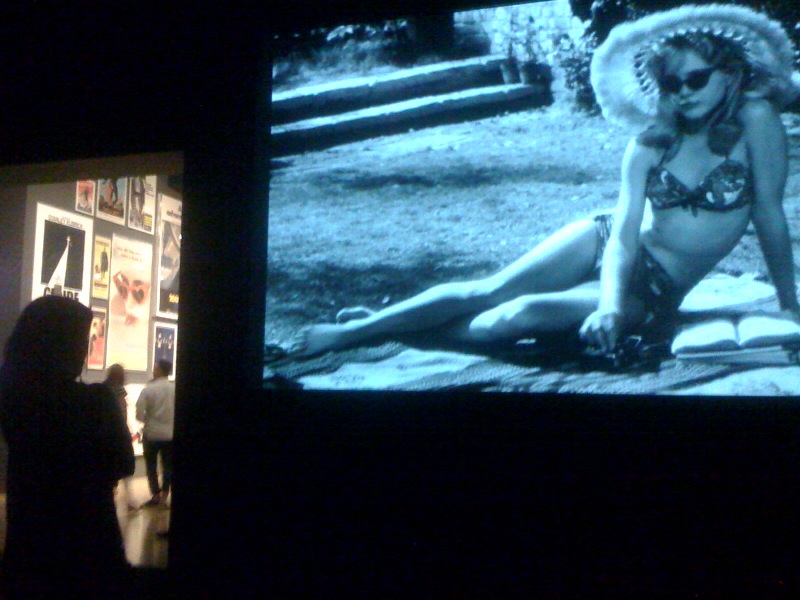
…. and Lolita contemplating us…..
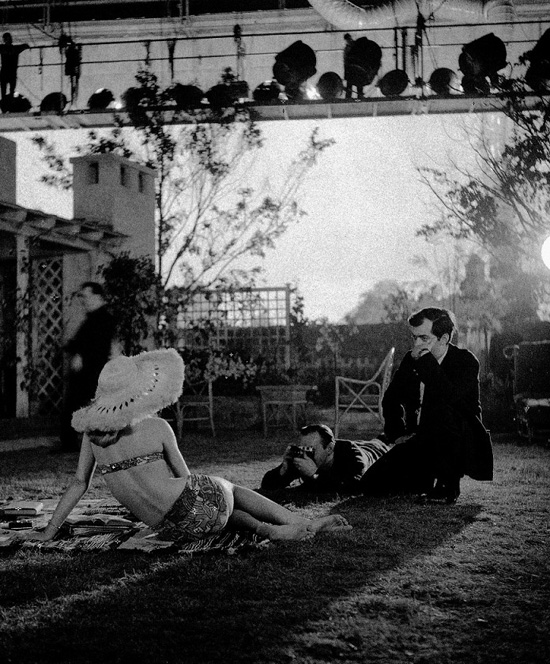
Kubrick and Sue Lyon (Lolita) photographing the iconic scene
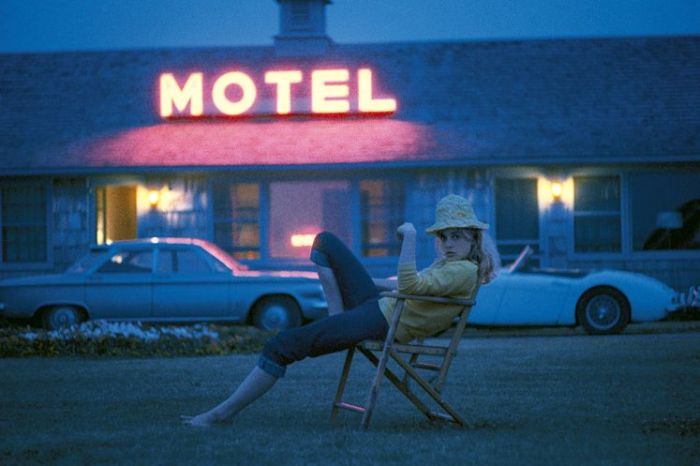
Promotional shot of Sue Lyon by Bert Stern
(More photos from Bert Stern’s legendary shoot can be found here).
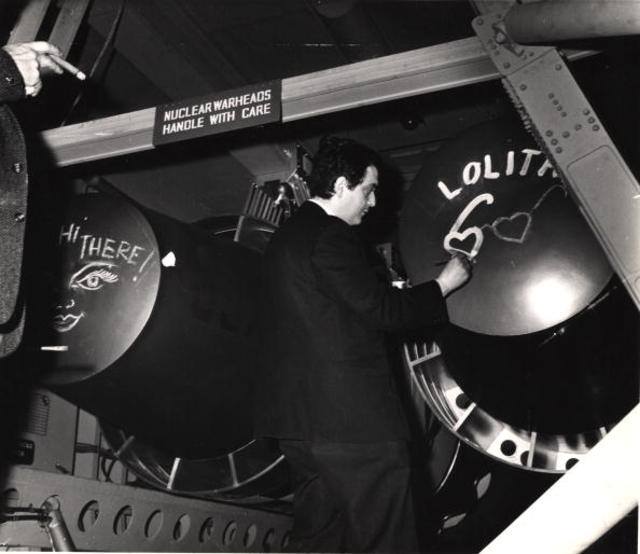
Designing Armageddon: model of the War Room set from Dr. Strangelove
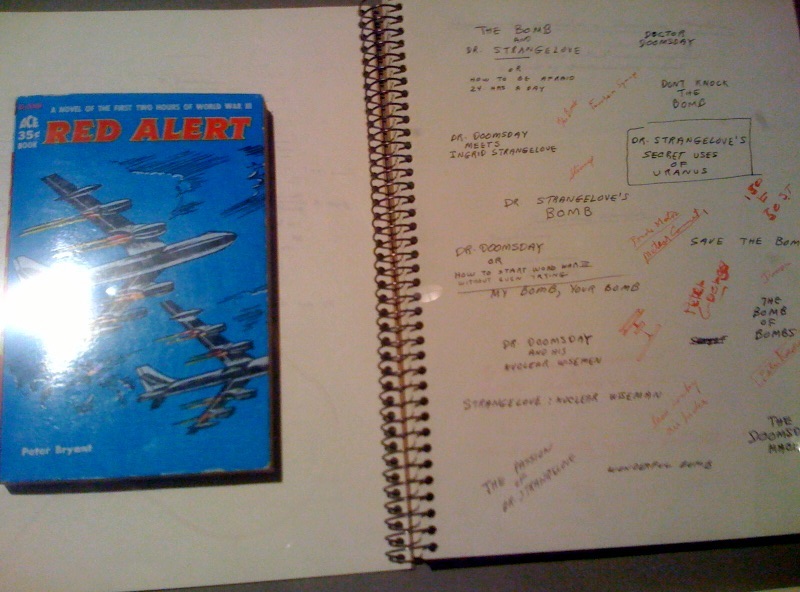
Copy of source material for Dr. Strangelove, with Kubrick’s notes for possible film titles
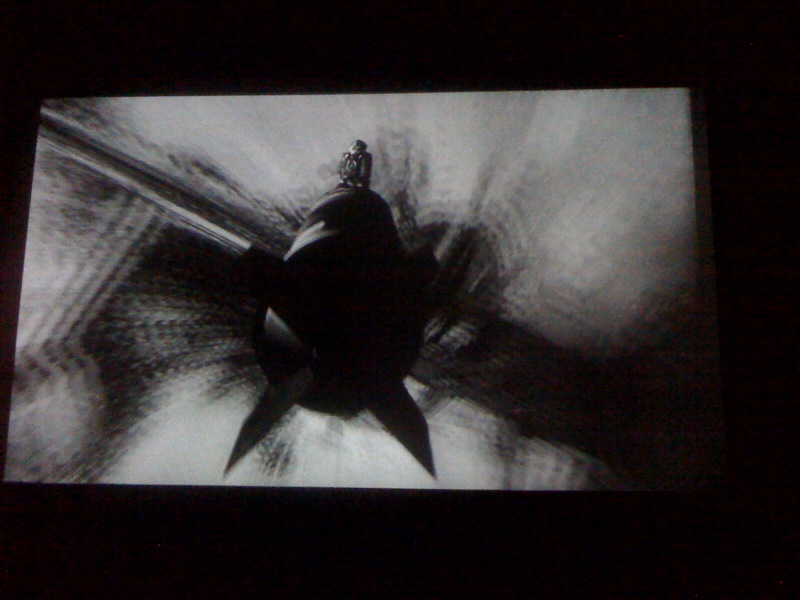
Riding the Bomb
Who says doomsday is the end of the world?
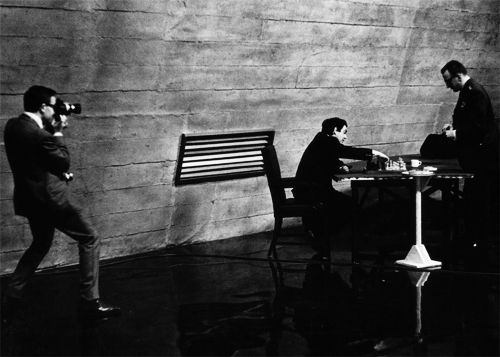
Peter Sellers filming Kubrick playing chess with George C. Scott on set of Dr. Strangelove
Polish poster for 2001: A Space Odyssey
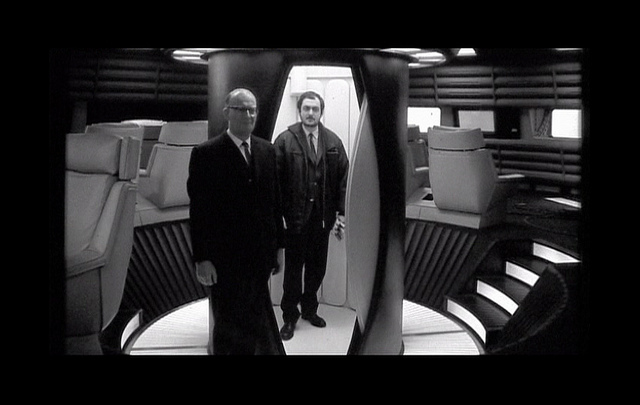
2001 co-author Arthur C. Clarke with Kubrick on set
Stargazer….
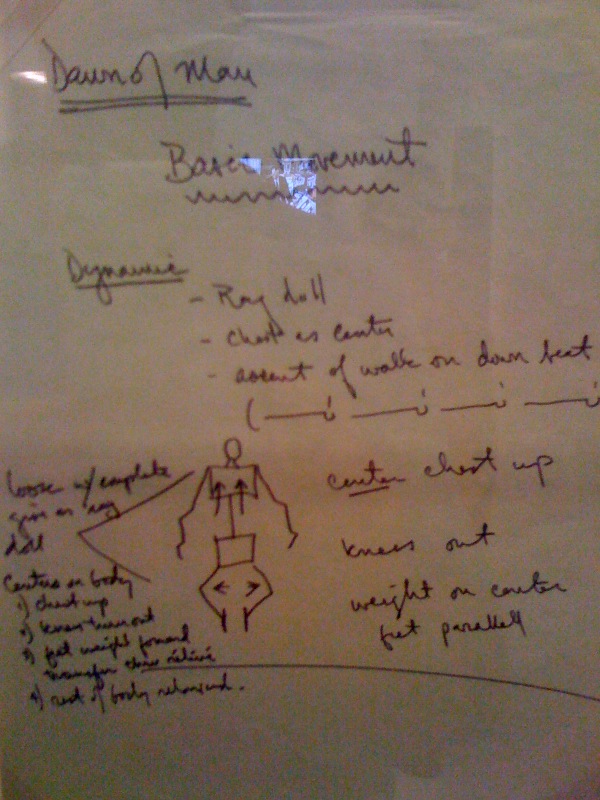
Designing movement for the Dawn of Man
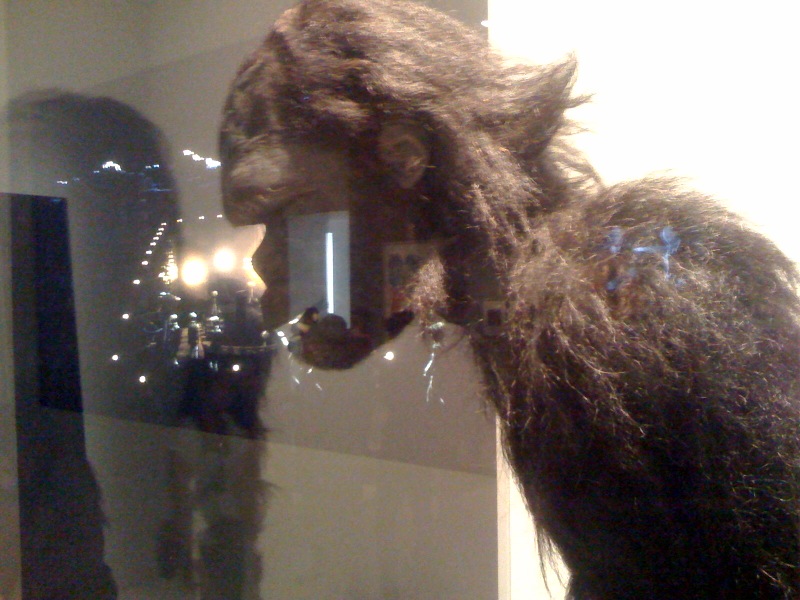
Grasping new concepts (2001: A Space Odyssey)
2001 in 1968
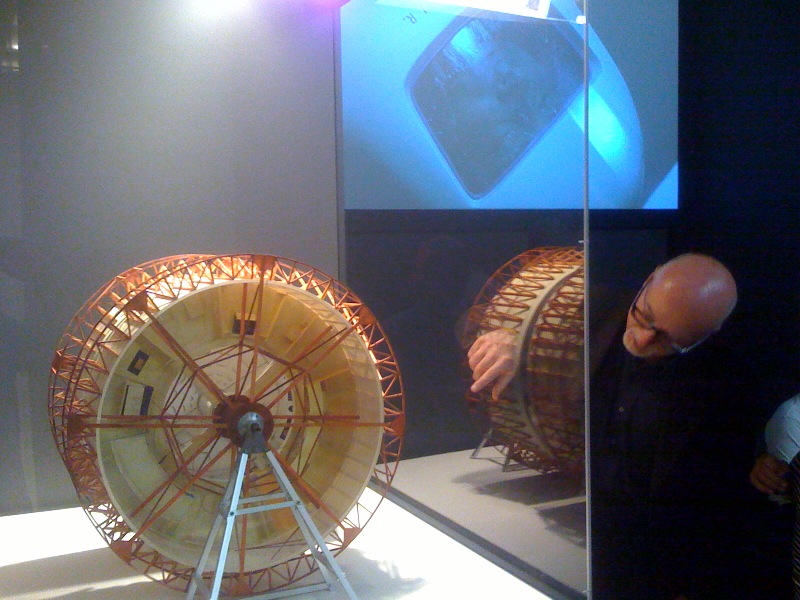
Model of the giant centrifuge set
The real thing
Filming inside the centrifuge set
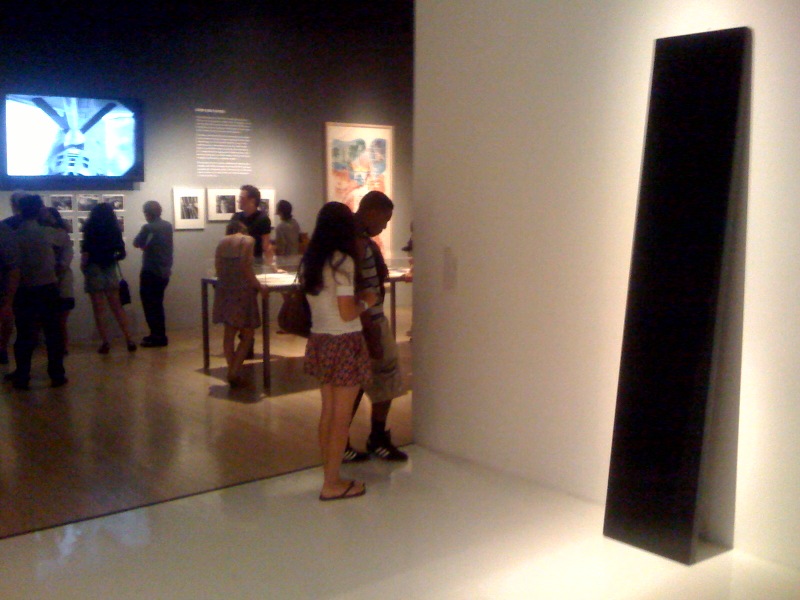
Caution: Unattended Monolith
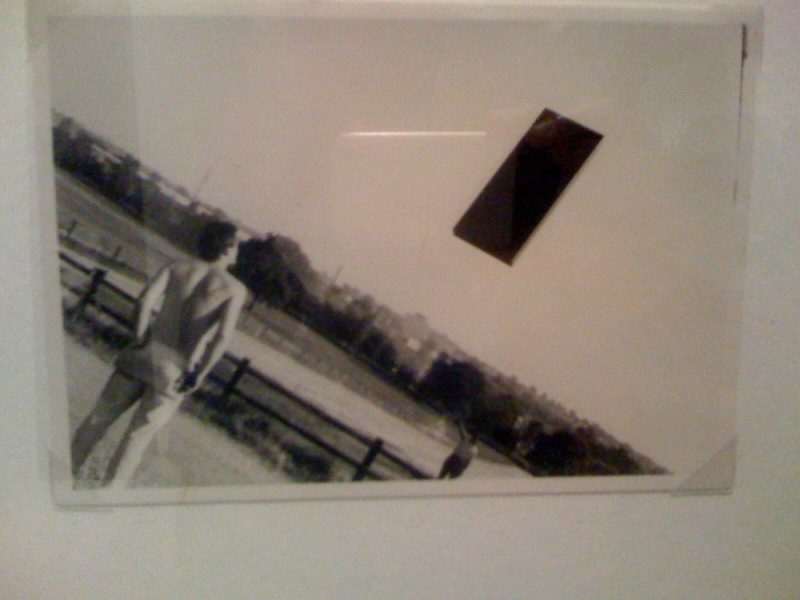
Early thoughts were to “fly” the monolith with wires. This idea was later abandoned.
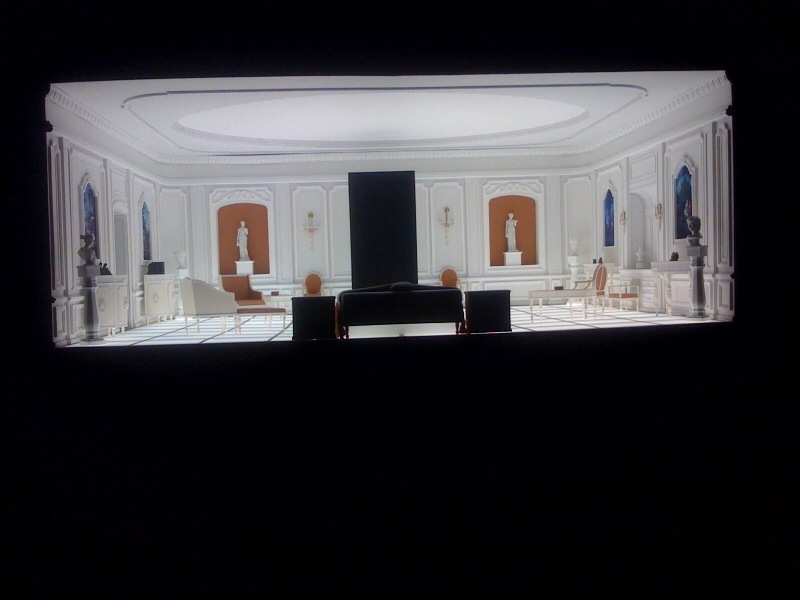
The alien in the familiar: suspended model of the White Room where Man takes the next step in his evolution (2001: A Space Odyssey)
One possible future of Man —
or another —
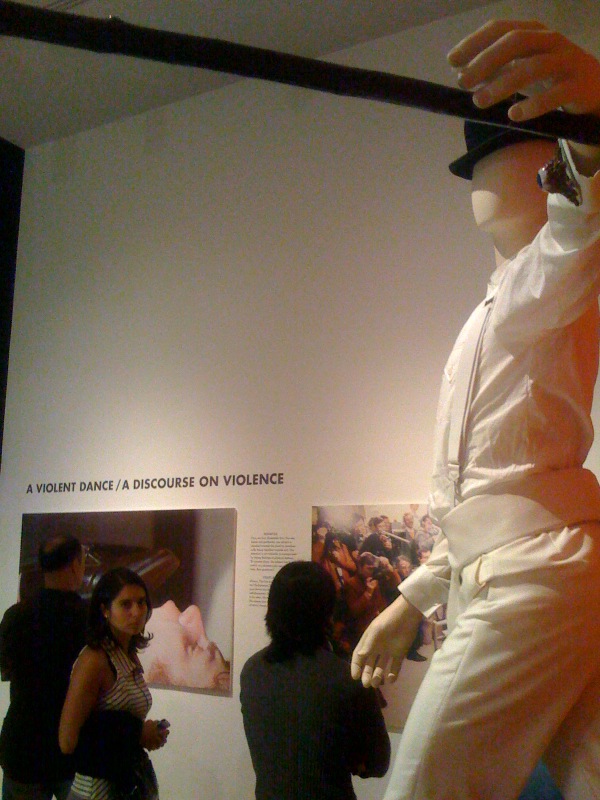
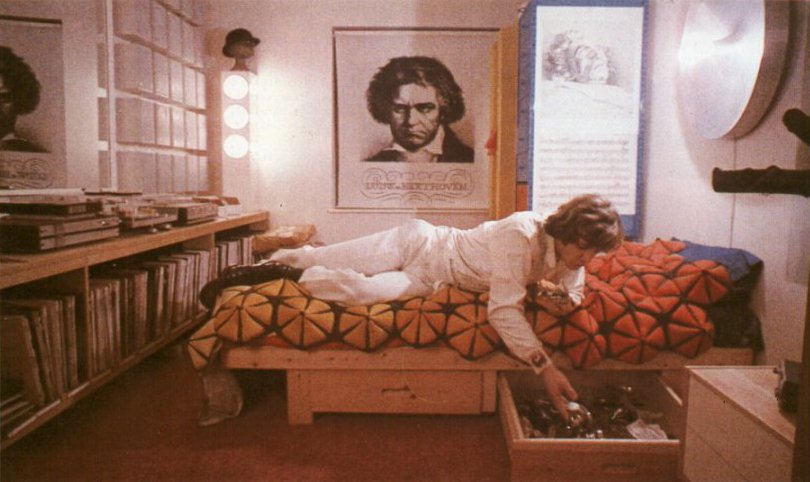
Even mannequin Alex inspires unease (A Clockwork Orange)
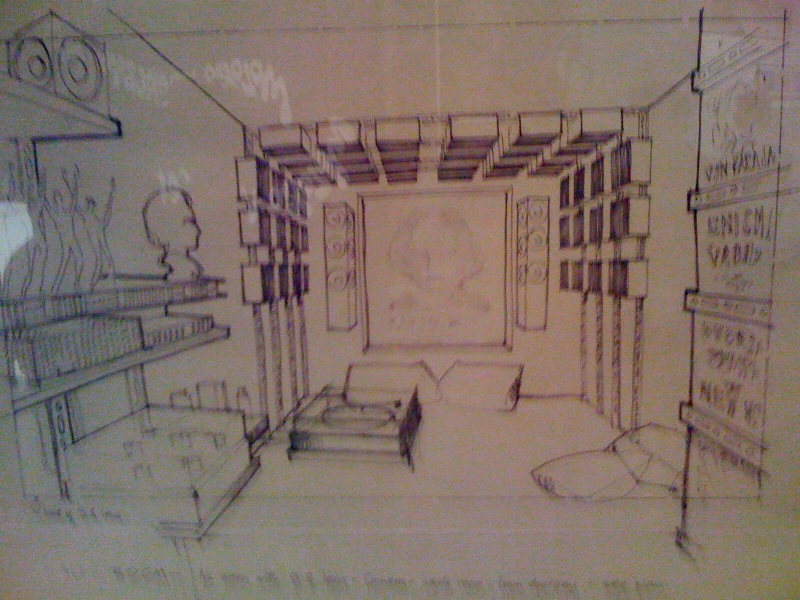
Design sketch for Alex’s room
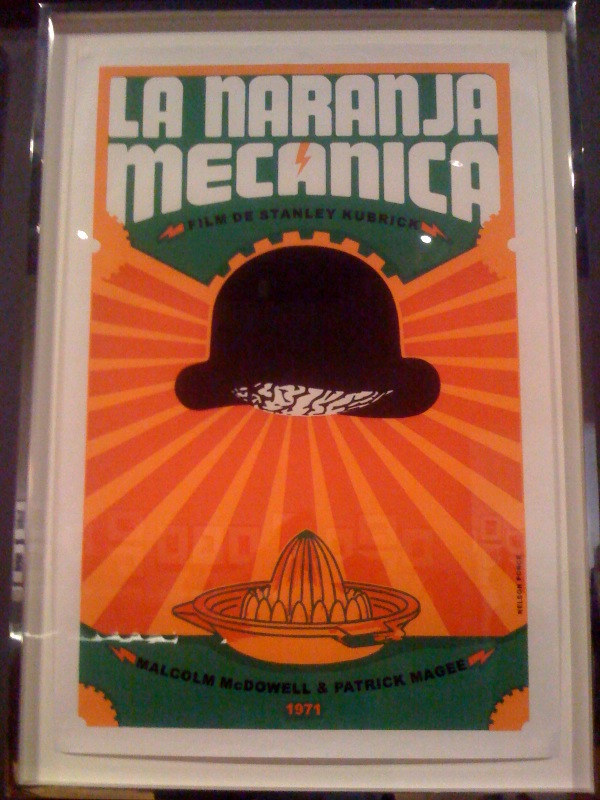
Fallout from the film led to Kubrick withdrawing it from circulation in the UK for 27 years. I had to travel to Paris to see it for the first time, dubbed into French
Set design sketches by John Barry
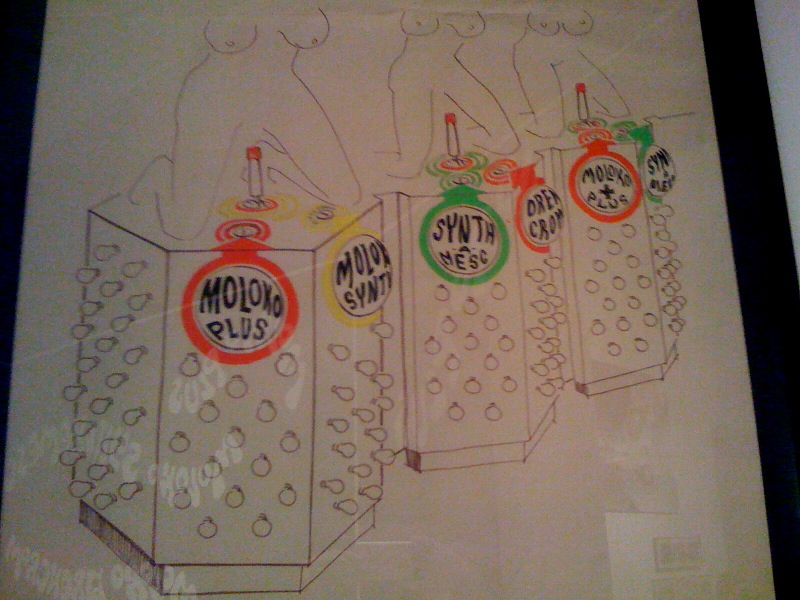
Got milk?
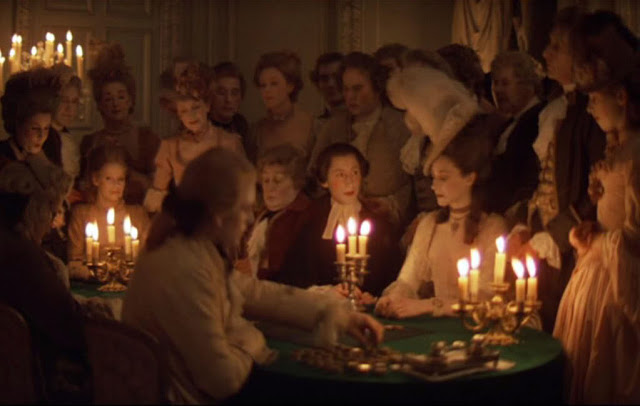
In which our Hero lies amidst the illusions of his invulnerability (Barry Lyndon)
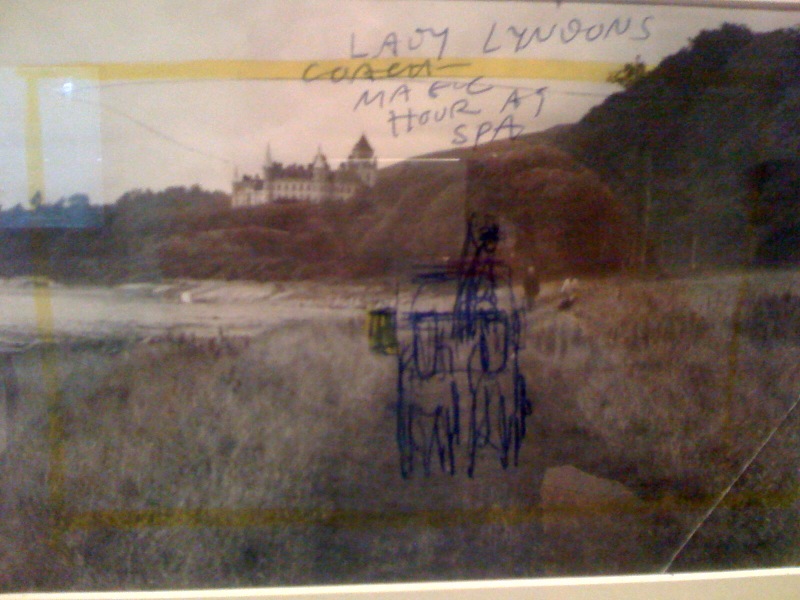
Kubrick would use location photos to storyboard, as with this shot of a carriage
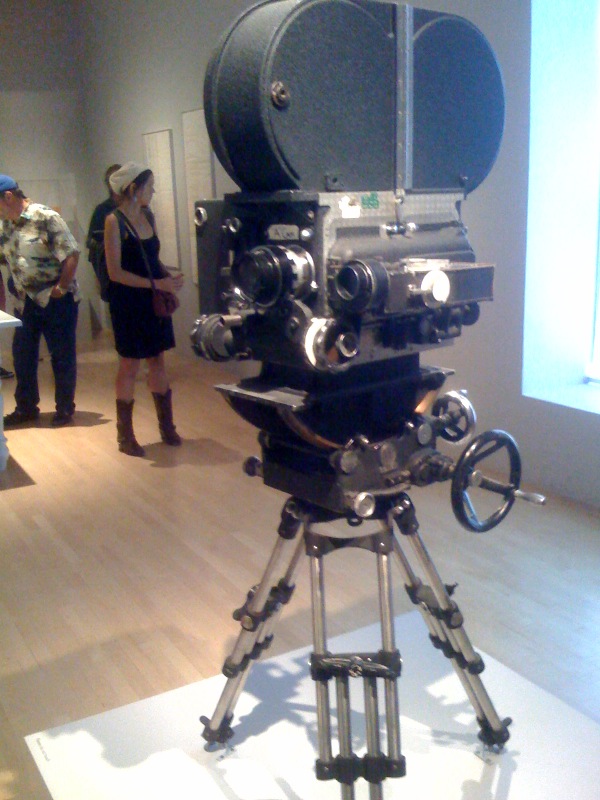
Customized camera and lens for capturing the impossible beauty of Barry Lyndon
“My candle burns at both ends
It will not last the night;
But oh, my foes, and ah, my friends —
It gives a lovely light.”
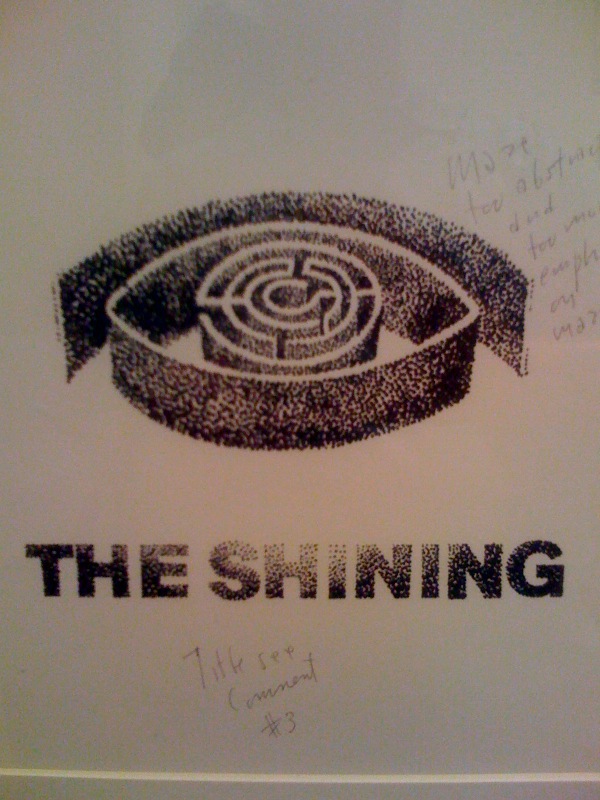
Early poster design by Saul Bass
Kubrick and Jack Nicholson on set
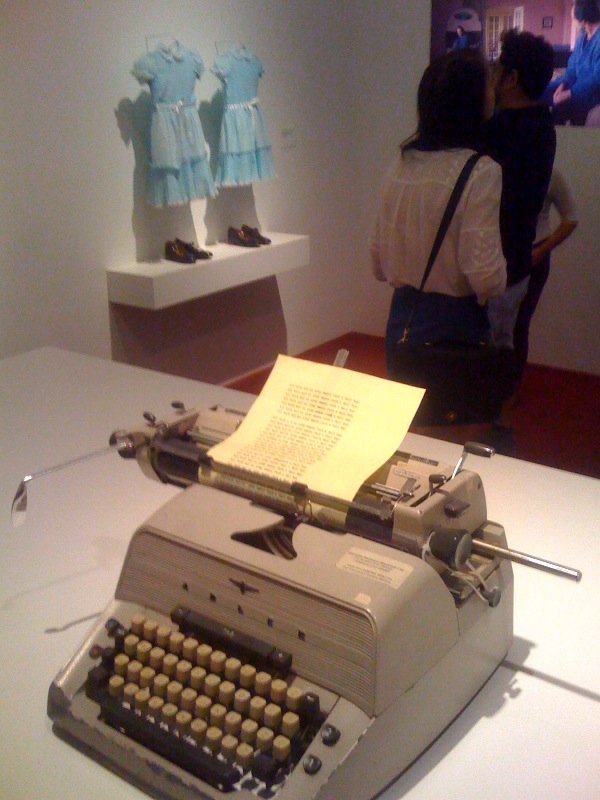
“All work and no play makes Jack a dull boy” (The Shining)
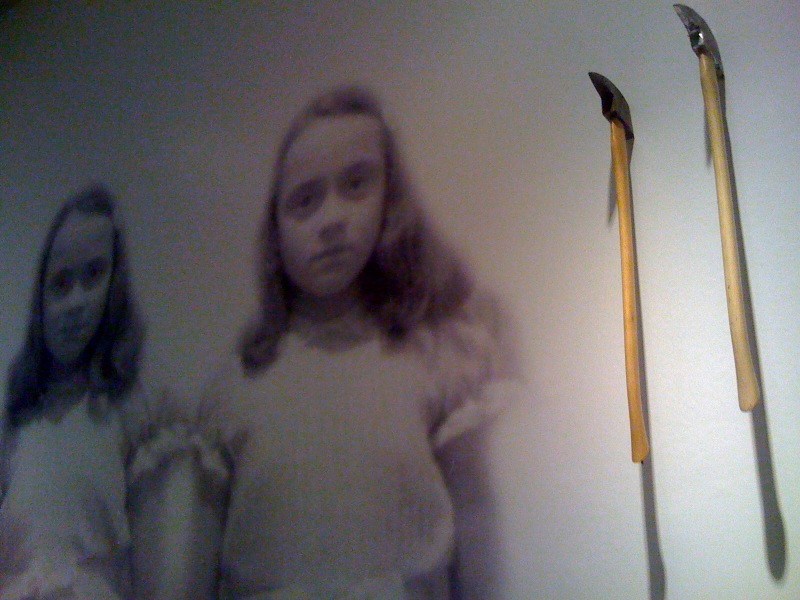
“Helloooo, DANNY!”
What critic Michael Ciment calls “the return of the repressed”, a strand of behaviour that weaves throughout Kubrick’s work, becoming a murderous psychosis signalled by a telltale look:
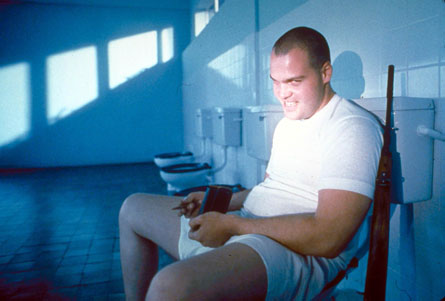
Private Pyle (Full Metal Jacket):
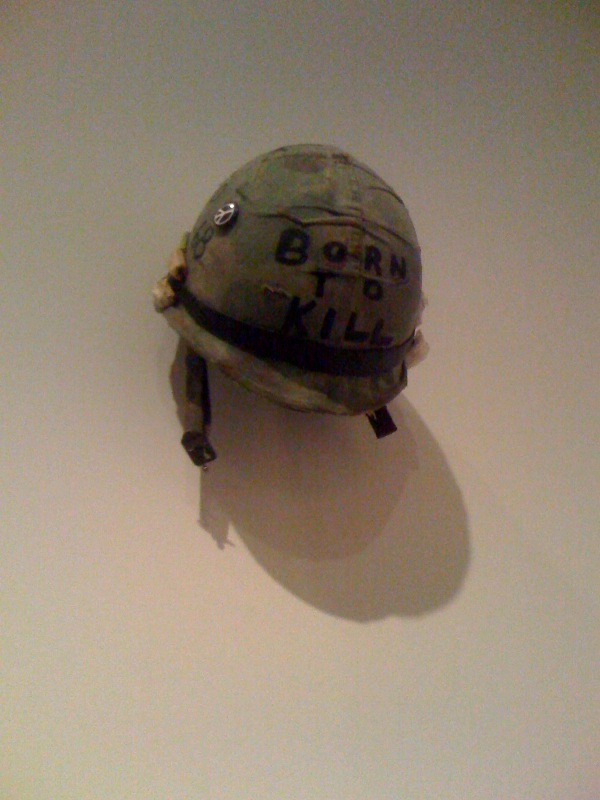
The duality of Man: Joker’s helmet from Full Metal Jacket
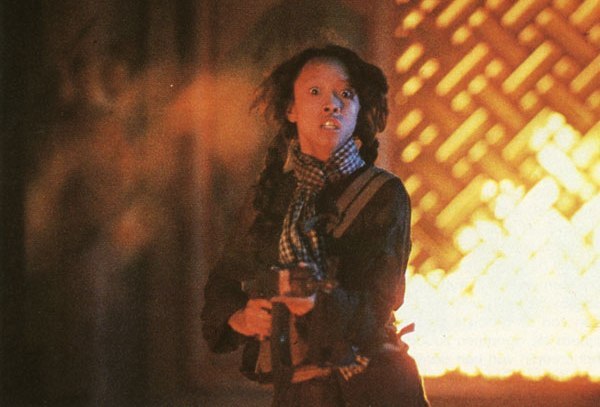
Enemy — thy name is Woman!
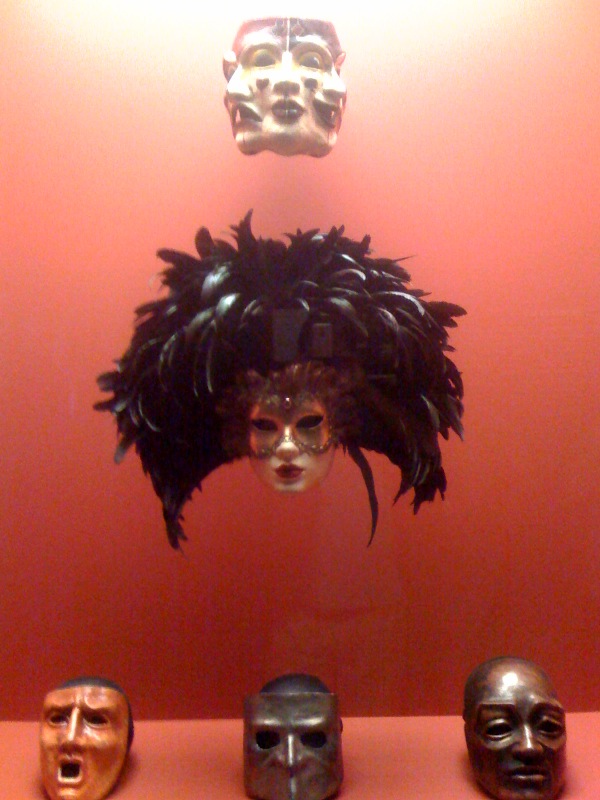
Cataclysms echoing endlessly through time: Aryan Papers installation (abandoned film project)





















































 HOLLYWOOD ( and all that )